Fire pit area design tool
A fire pit is a purchase; a fire pit area is a design. The difference is the 12 to 16 foot circle around the flame: what you sit on, what is underfoot, what blocks the wind, and how you walk there in the dark. Painted Acre lets you place the whole room on a painting of your yard and check the sight lines and distances before you buy a bag of gravel.
No account needed. The studio opens with this scenario ready to go.
Get the circle right
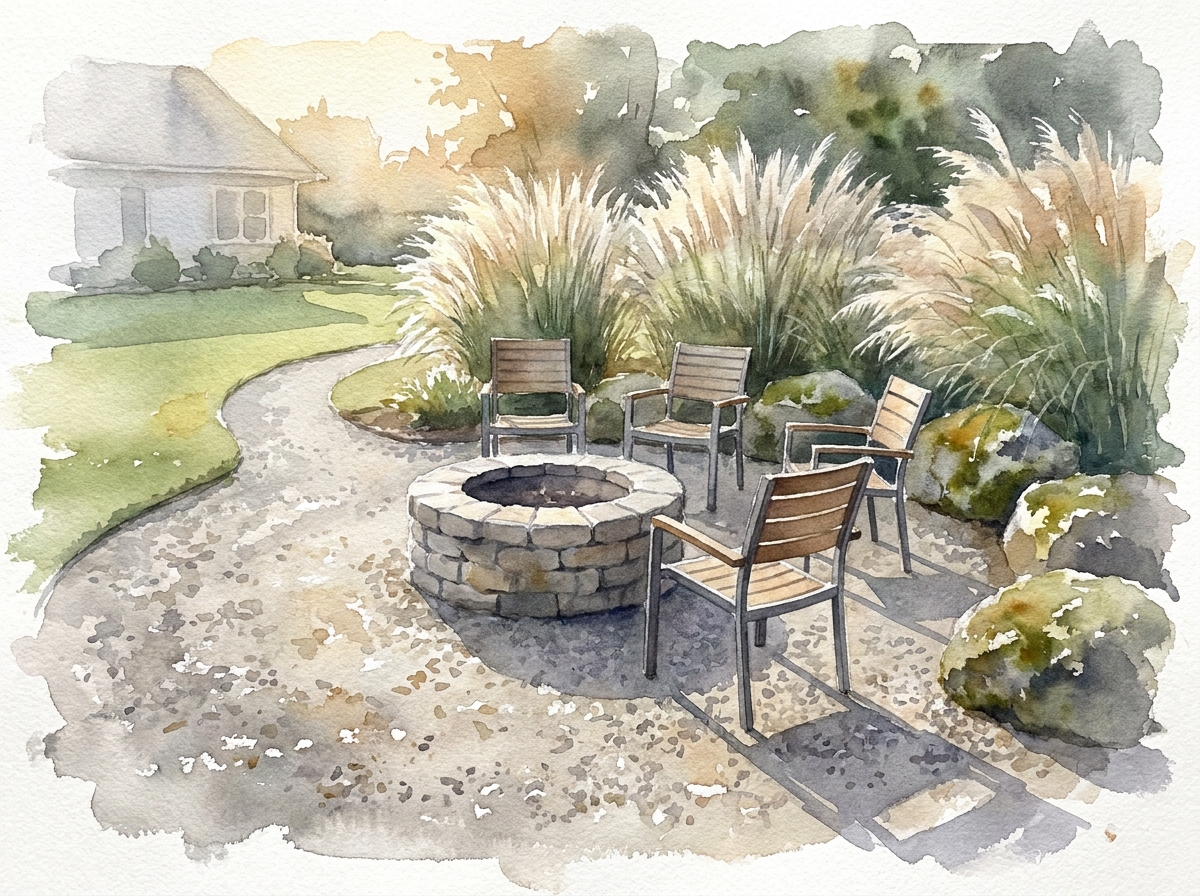
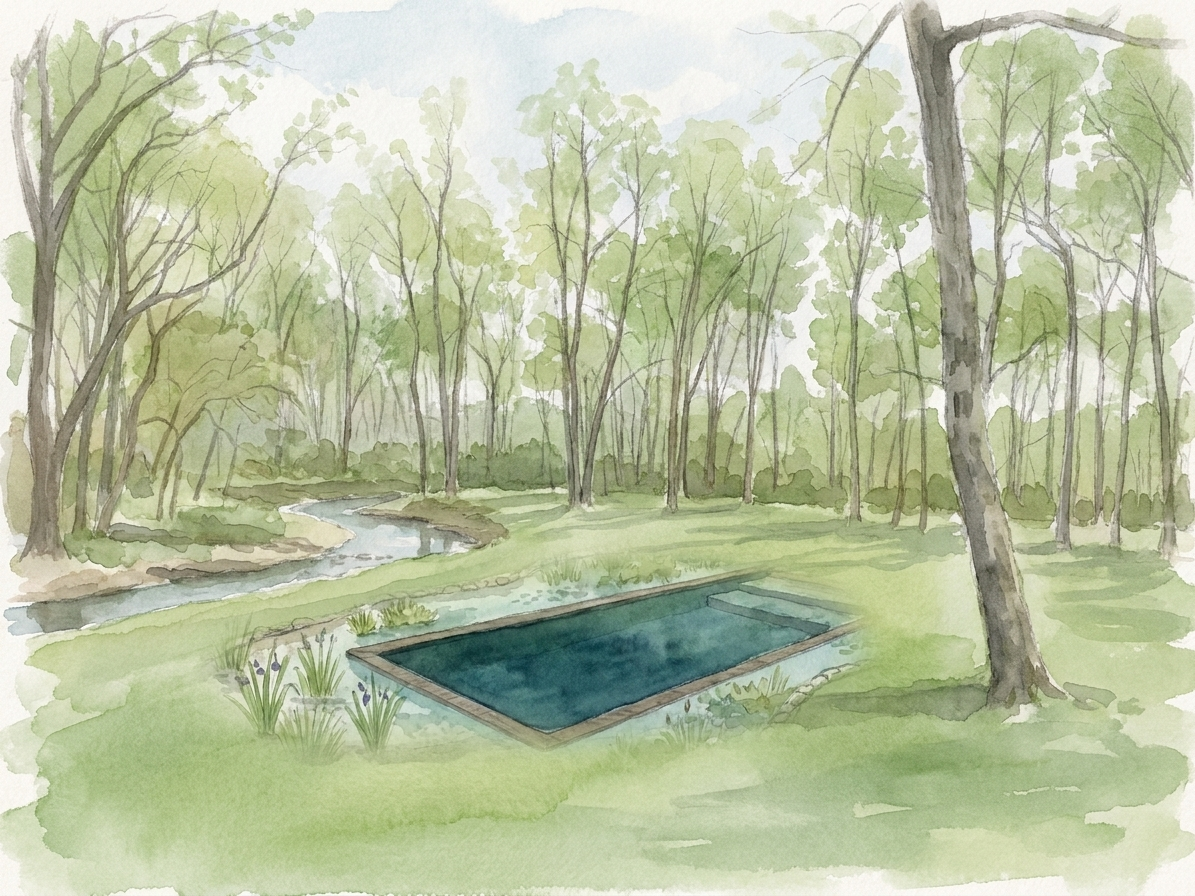
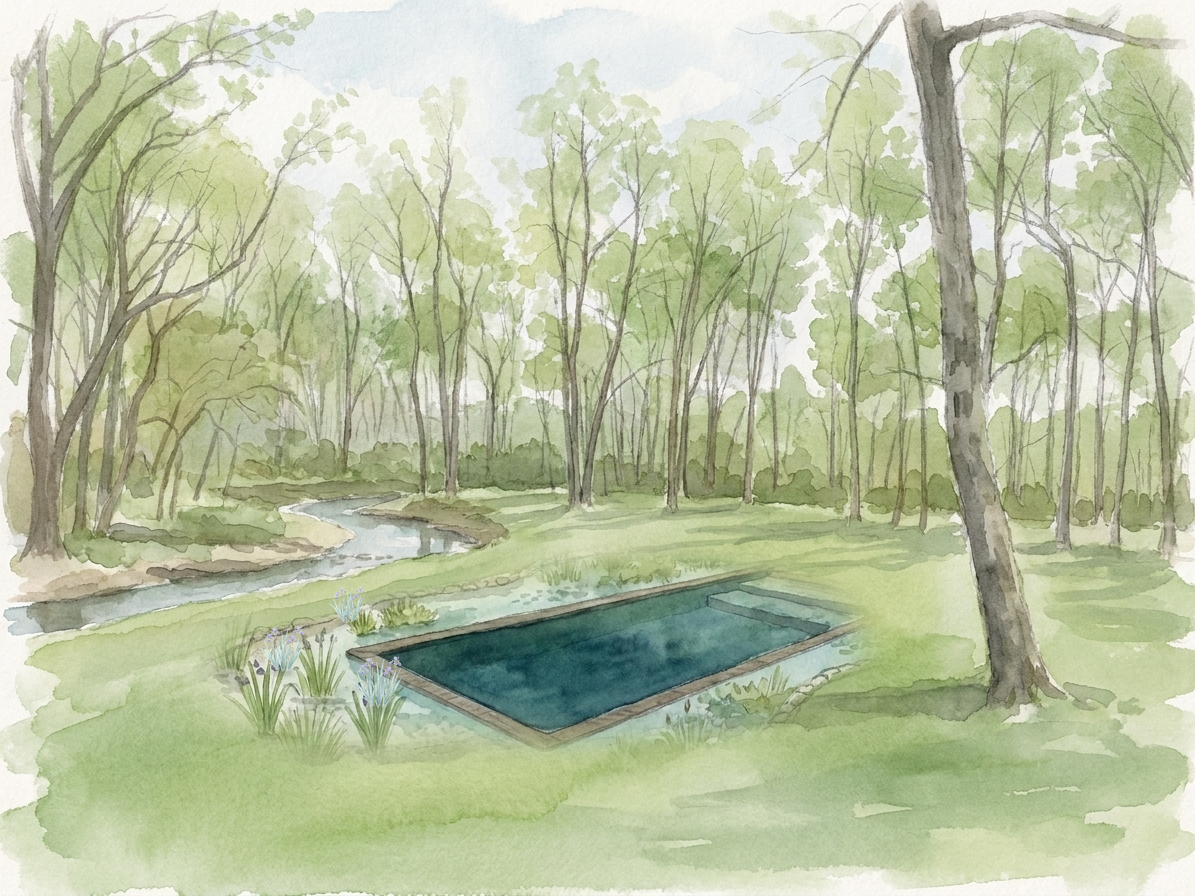
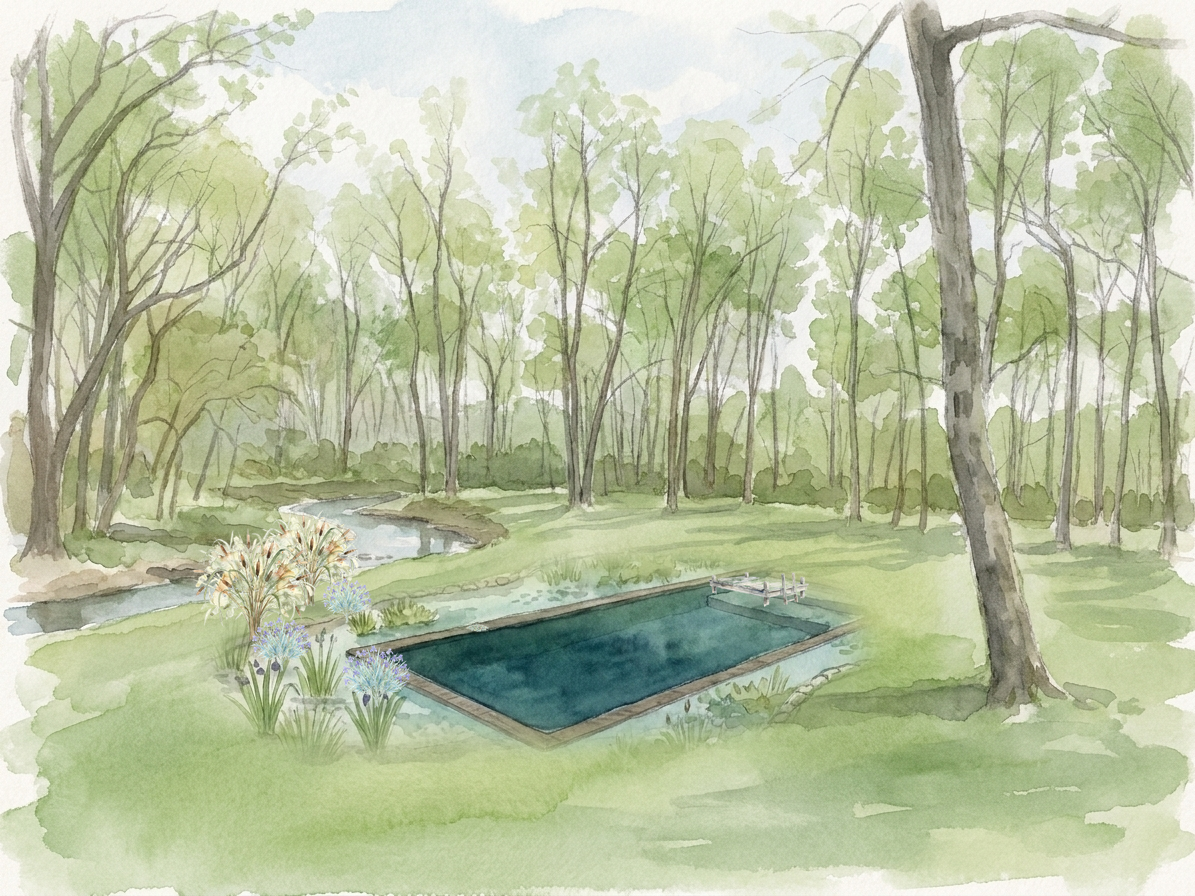
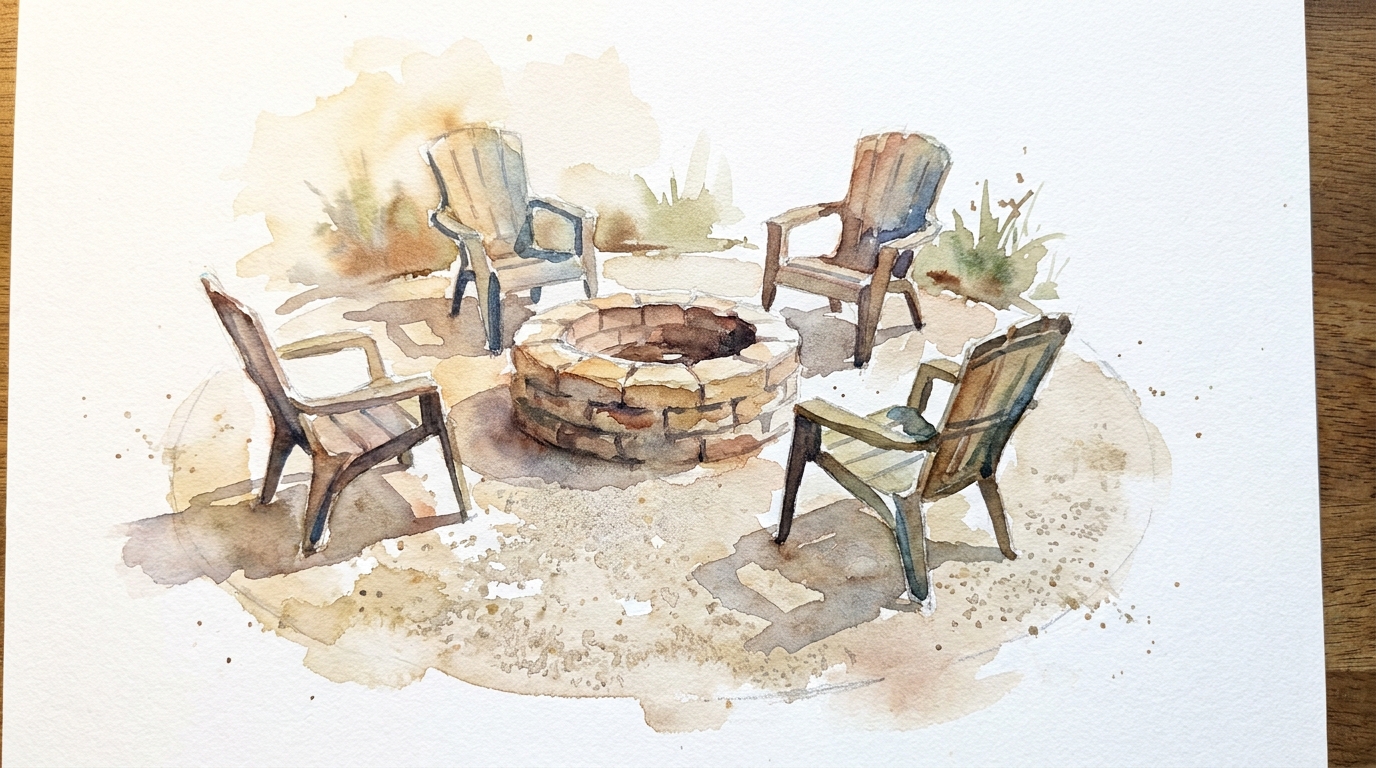
Chairs need 6 to 7 feet from the flame center to sit comfortably, plus walking room behind, so plan a 14 foot circle minimum. Keep the pit 10 feet from structures and fences and never under branches. Placing the circle on your real yard instantly shows whether that dream corner actually fits chairs plus circulation, most do not.
Plant the walls of the room
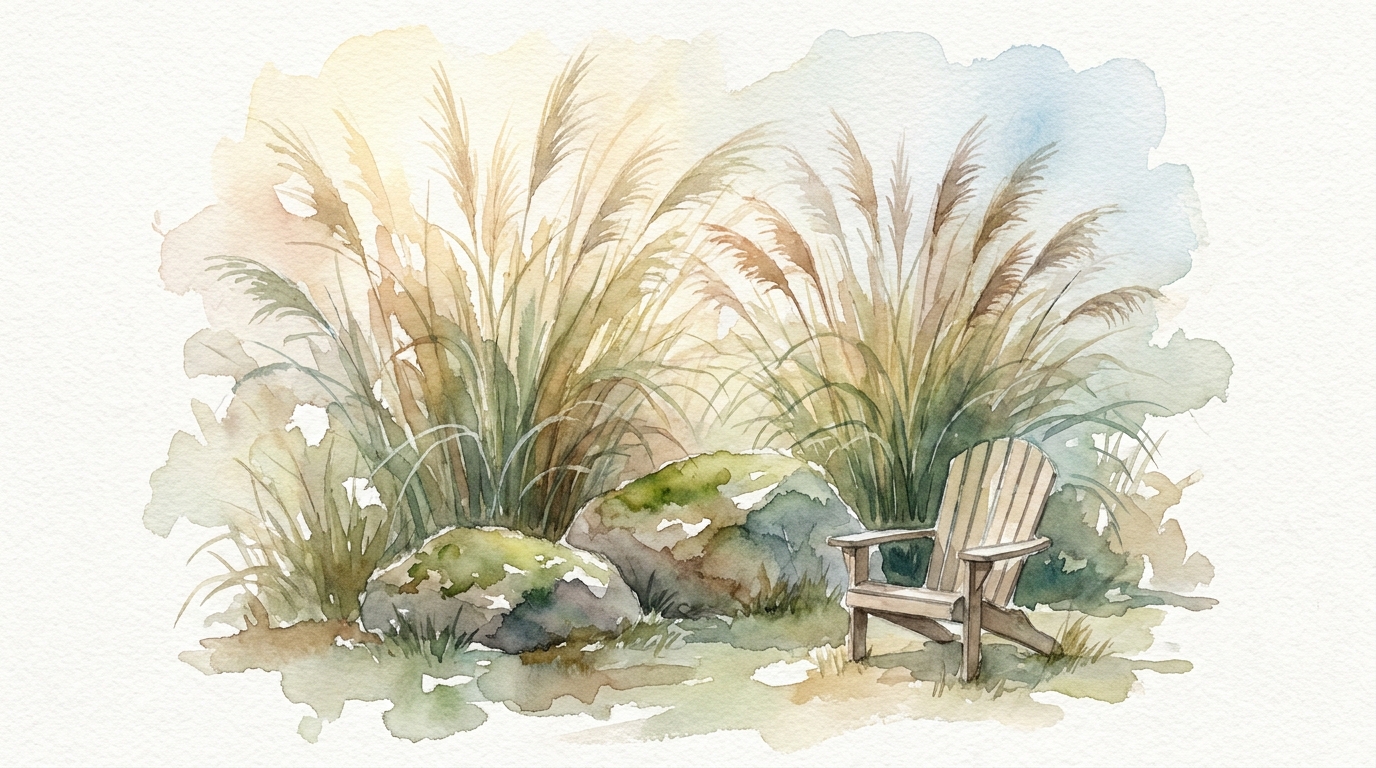
A fire area feels best with enclosure at its back: tall grasses or a boulder group behind the far seating, low and open toward the house so the fire stays visible. Grasses are the perfect fire pit wall, they screen at eye level when seated, move in the evening wind, and catch the firelight.
The path is part of the design
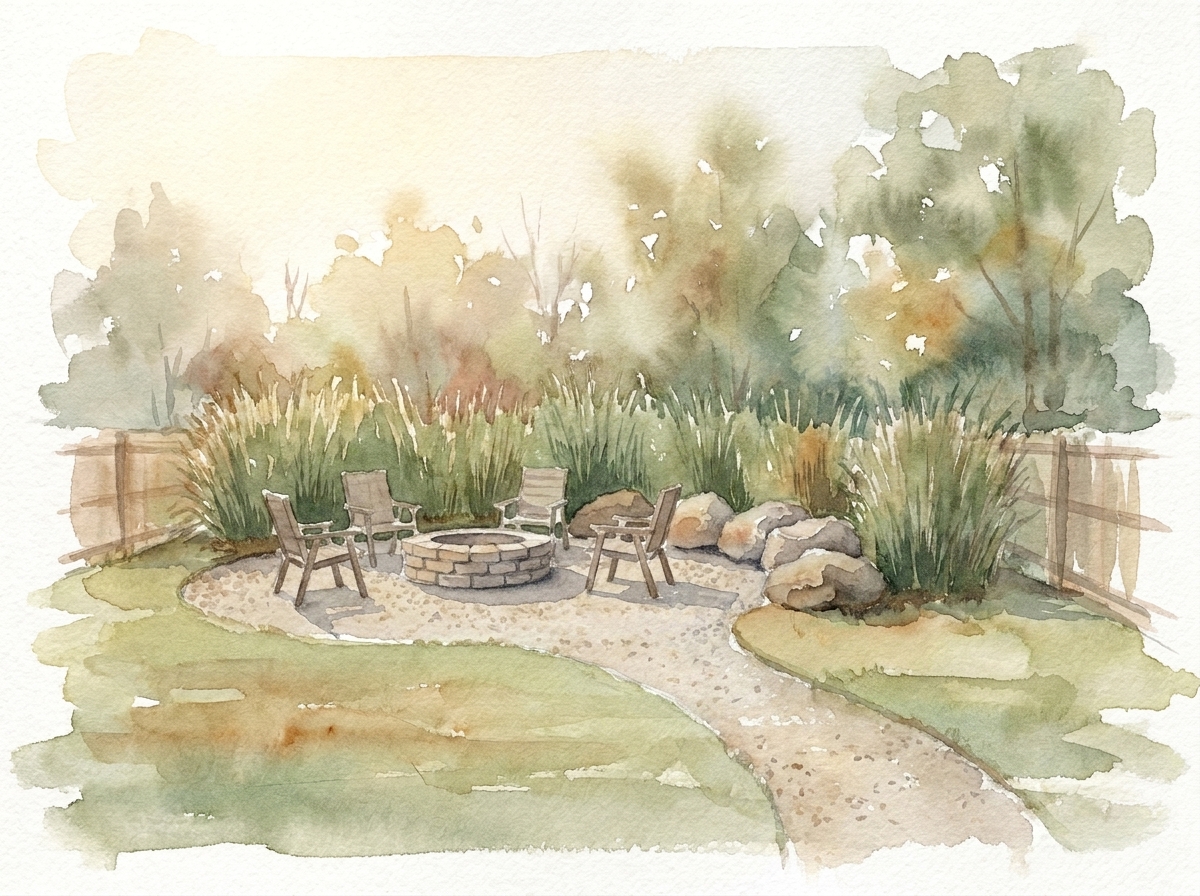
You will walk this route holding drinks in the dark. Make it generous, 4 feet wide, with a surface that reads underfoot, and let it curve so the fire area reveals itself as a destination instead of sitting in the middle of the lawn like a lost patio.
Before and after, honestly
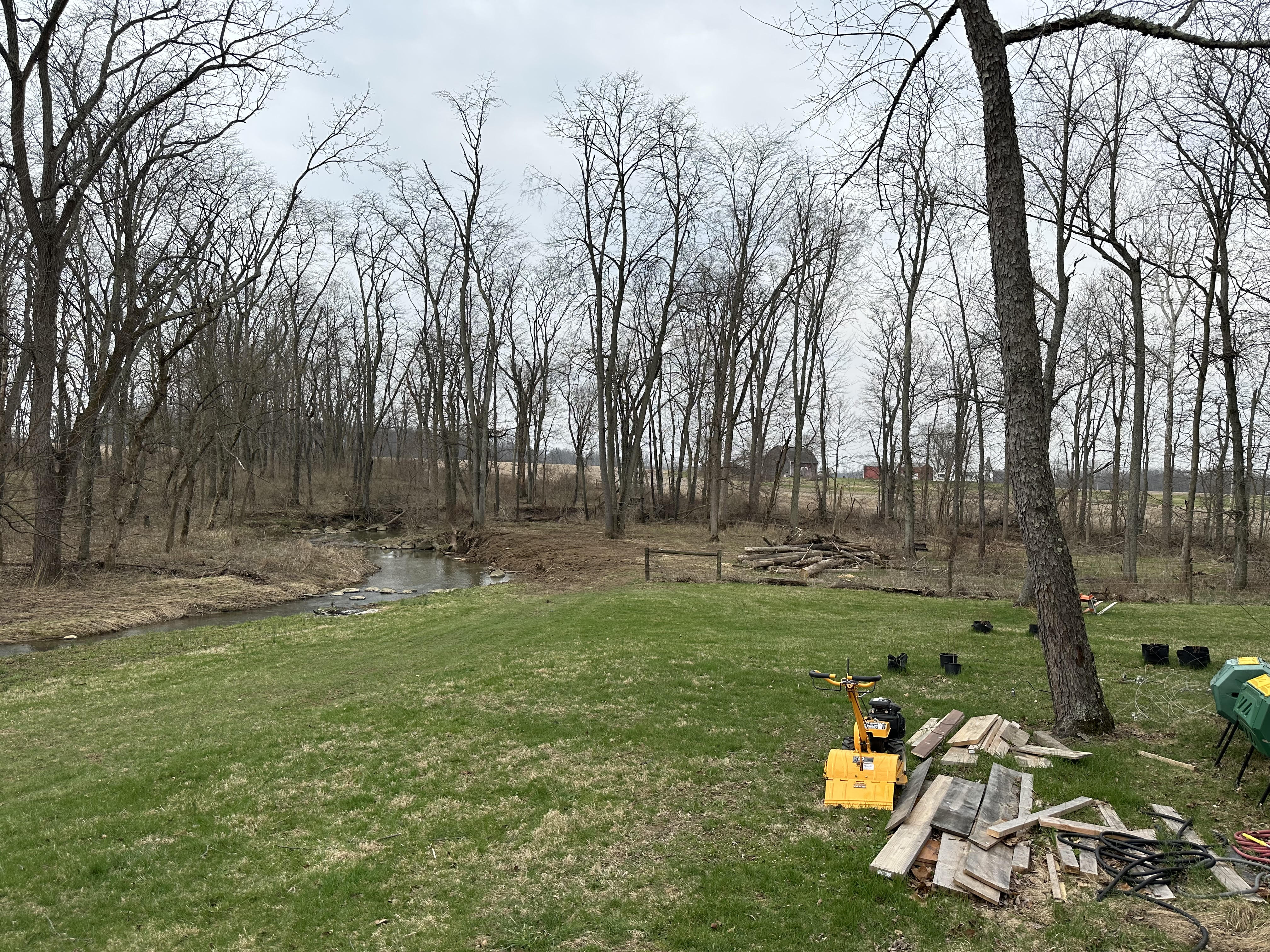
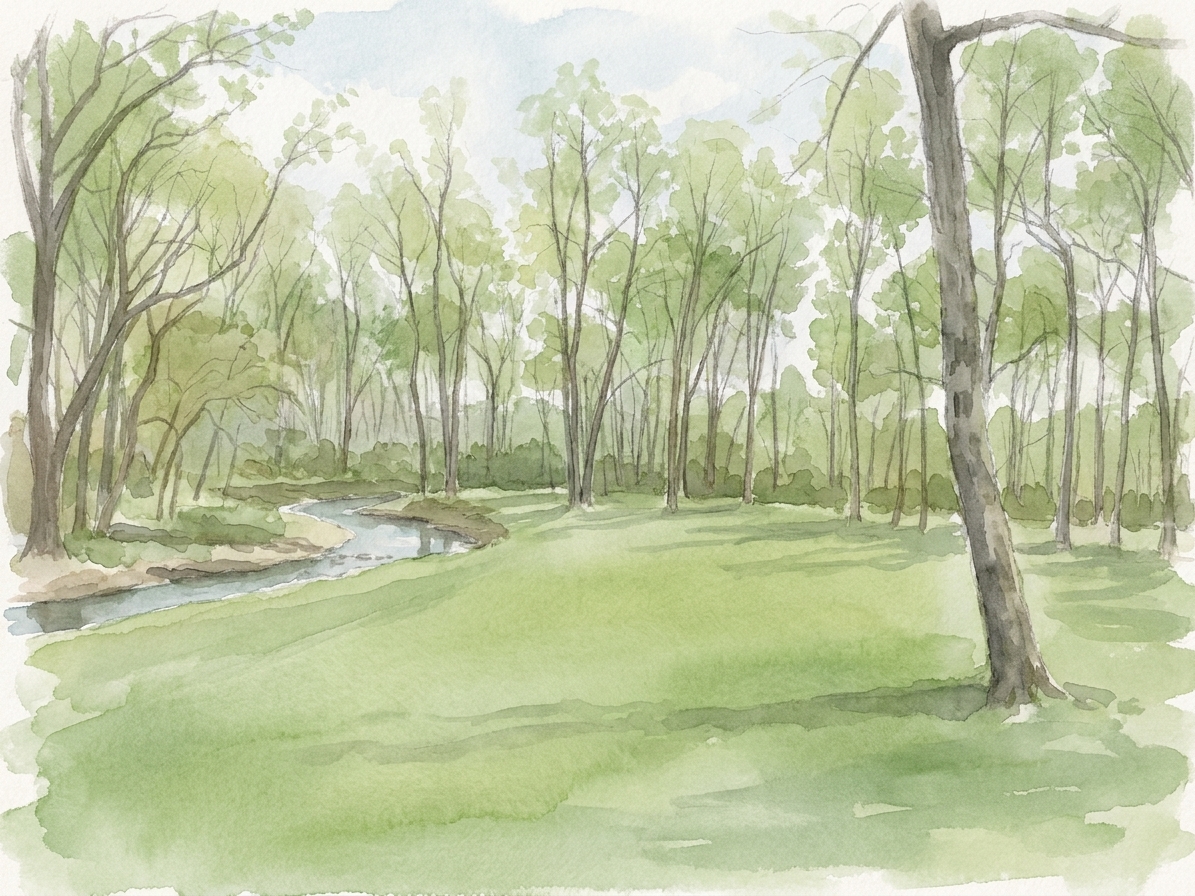
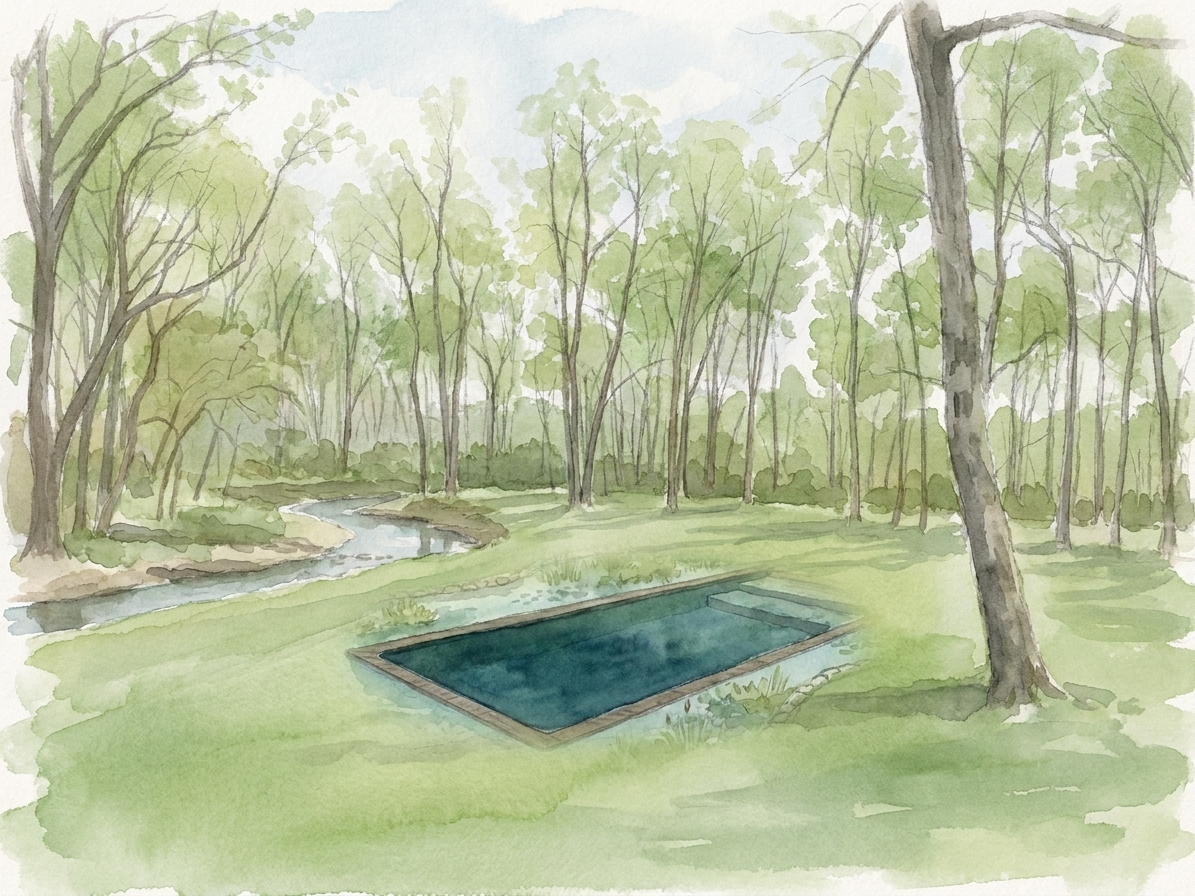
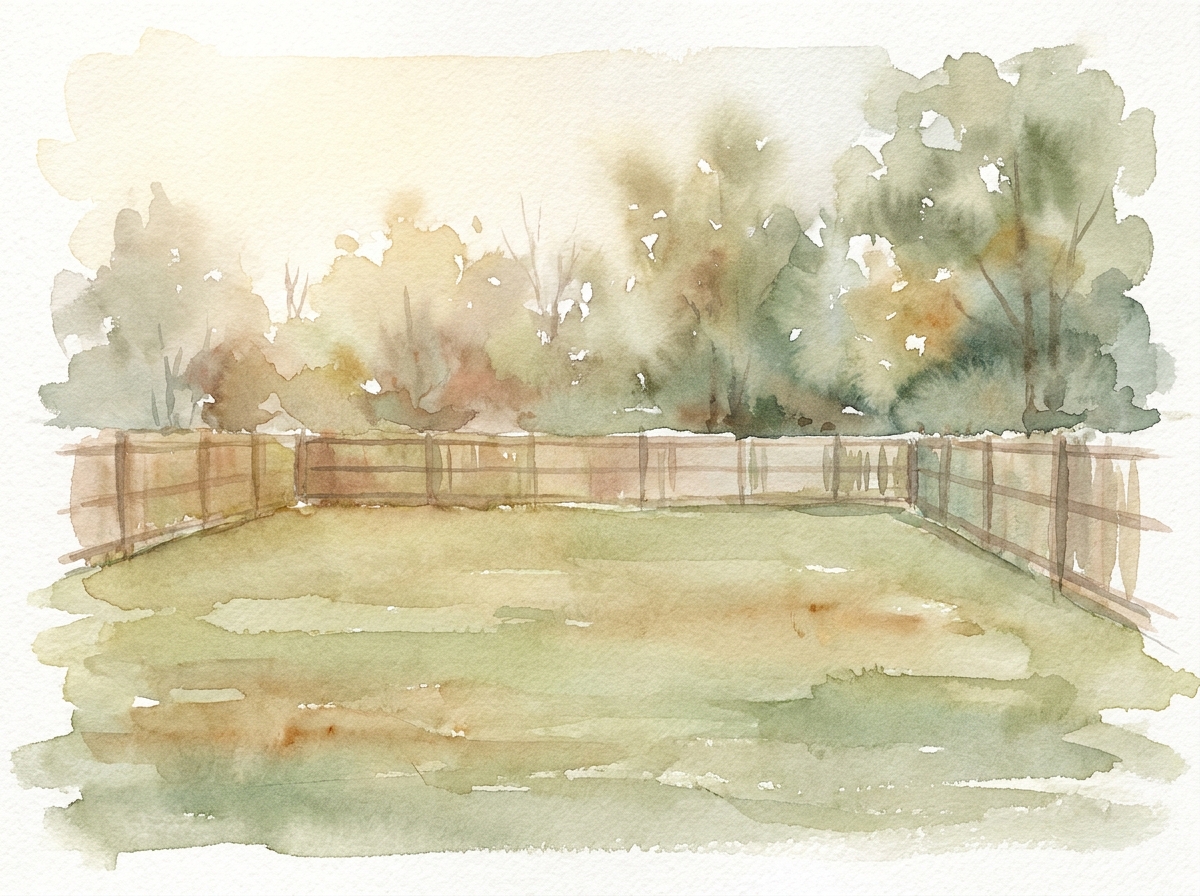
Every Painted Acre plan starts from a photo of a real yard and ends with the same view, years grown. No invented dream yard, no stock photos.
The fire circle palette, painted
Grasses that glow in firelight, stone that grounds the circle, and seating that stays out all year. Painted at every age, and your ZIP narrows it to your zone.
Fire Pit
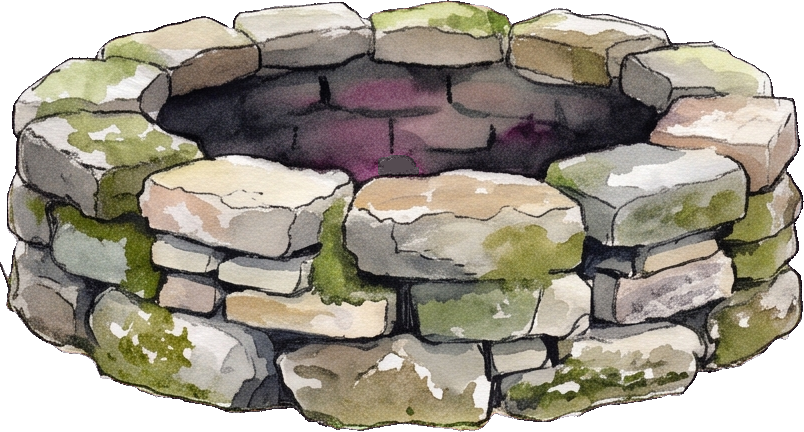
The anchor. Set it first, everything else takes its distance from the flame.
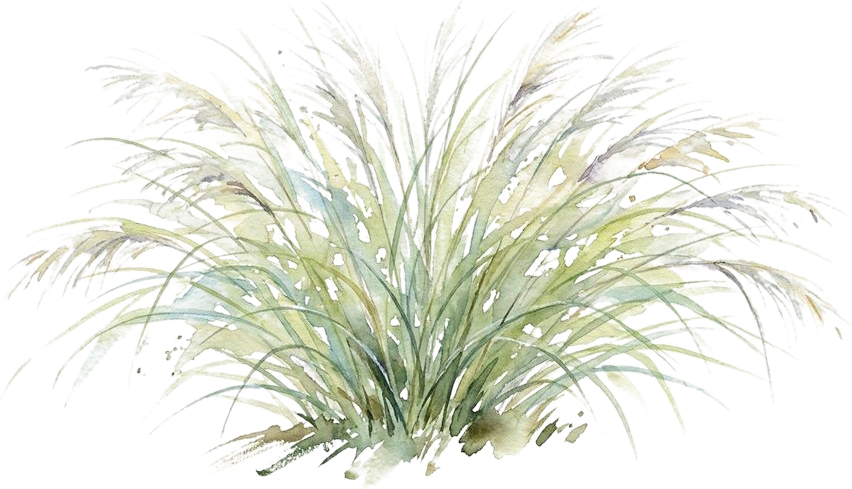
Maiden Grass
The back wall of the room: 6 ft plumes that move and glow in firelight.

Fountain Grass
Lower grass tier flanking the seating openings.
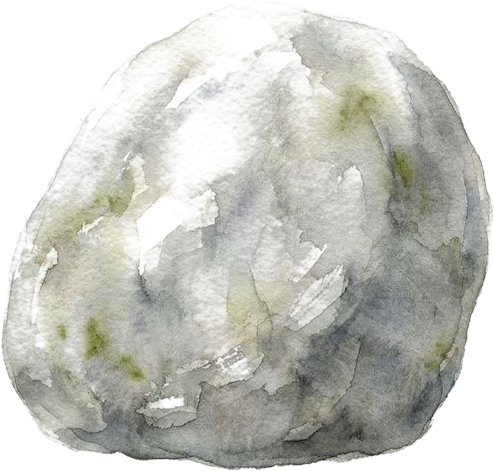
Boulder
A grouped outcrop behind the circle grounds it, and doubles as overflow seating.
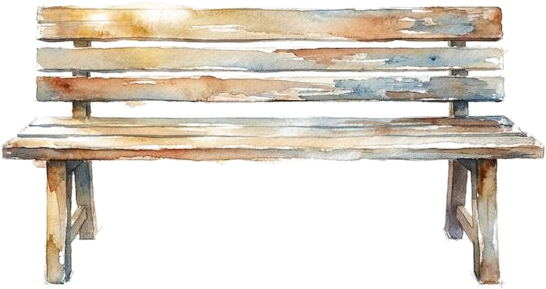
Garden Bench
Fixed seating on the house side so the area furnishes itself.
Questions people ask
▸How big should a fire pit area be?
Plan a 14 to 16 foot diameter circle: pit in the center, 6 to 7 feet from flame to chair, walking room behind the chairs. Smaller circles put knees against the fire ring and get abandoned.
▸What is the best base for a fire pit area?
Compacted crushed gravel with a stone or paver ring is the standard: permeable, stable, ember-proof, and half the cost of a full paver patio. Save pavers for the path if budget allows.
▸How far should a fire pit be from the house and fence?
Ten feet from any structure, fence, or property line is the common code minimum, with no overhanging branches. Check local burn rules; placing it on a scaled painting of your yard makes the setback obvious.
▸Can I design the whole area before buying anything?
Yes. Place the pit, draw the gravel circle and path, plant the windbreak, then print the report: it prices the plants and gives the layout to work from.
What this is, and is not: Painted Acre produces an illustrative watercolor design plan: placement, plant choices, and an honest picture of growth over time. It is not an architectural, engineering, or construction document. For anything that involves excavation, water, structures, or grading, bring the plan to a qualified contractor or landscape professional and verify measurements, utilities, and local codes first.
Related scenarios
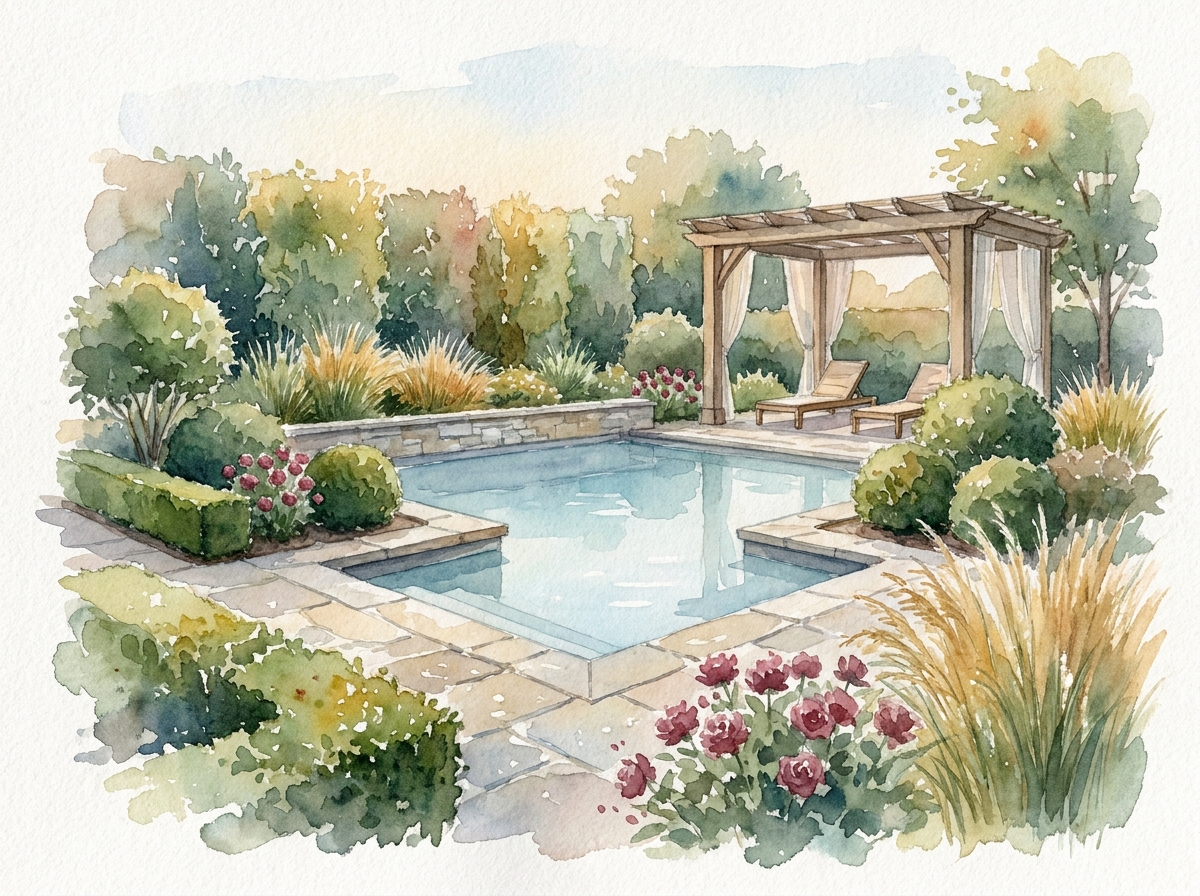 Play and recreation
Pool landscaping design tool
A new pool sits in the yard like a bathtub in a parking lot until the landscape catches up, and the …
 Water features
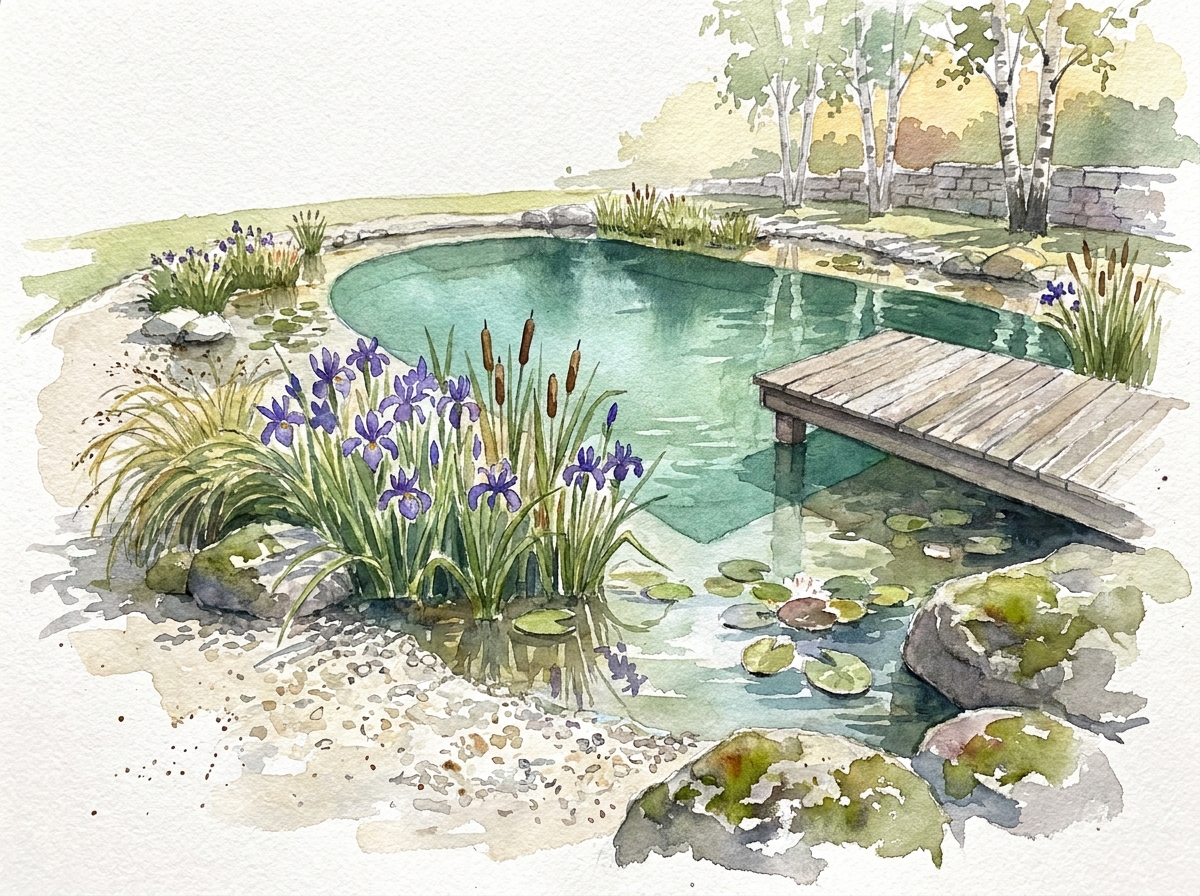
Natural swimming pond design tool
A natural swimming pond is a swimming hole and a wetland in one: a deep clear zone for you, a shallo…
watercolor · backyard privacy Privacy and screeningBackyard privacy design tool
Every privacy planting is a bet on time: how many plants, how far apart, and how many summers until …
watercolor · sloped backyard Problem yardsSloped backyard design tool
A slope is the most expensive part of any yard to get wrong and the most dramatic to get right. The …