Japanese garden design tool
Japanese garden design is subtraction: fewer plants, placed asymmetrically, each given room to become a specimen. That restraint is exactly why it is hard to plan on paper, because empty space you cannot see looks like a mistake. Painting the design on your actual yard, then watching the maple take fifteen years to earn its silhouette, is the honest way to design one.
No account needed. The studio opens with this scenario ready to go.
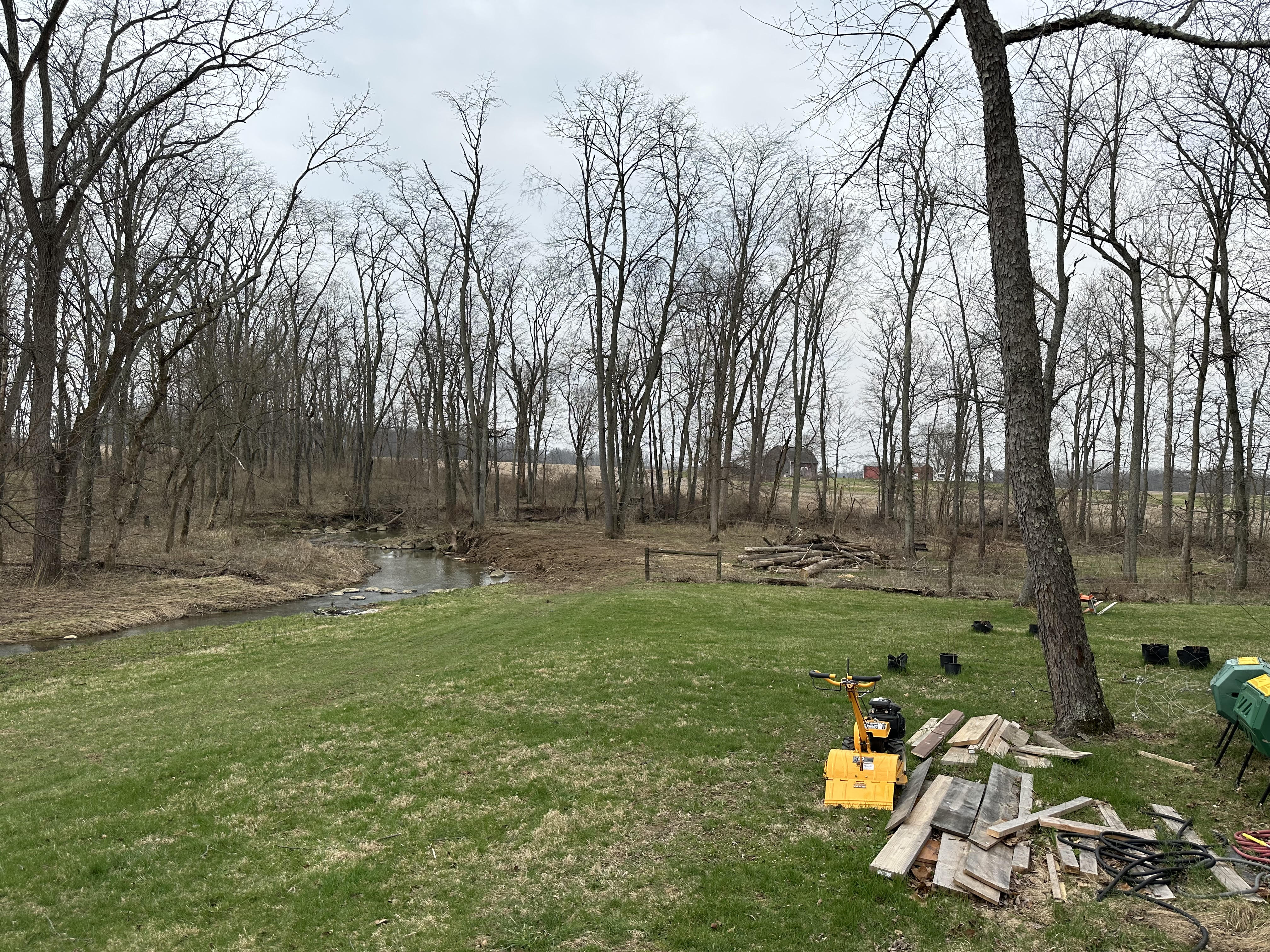
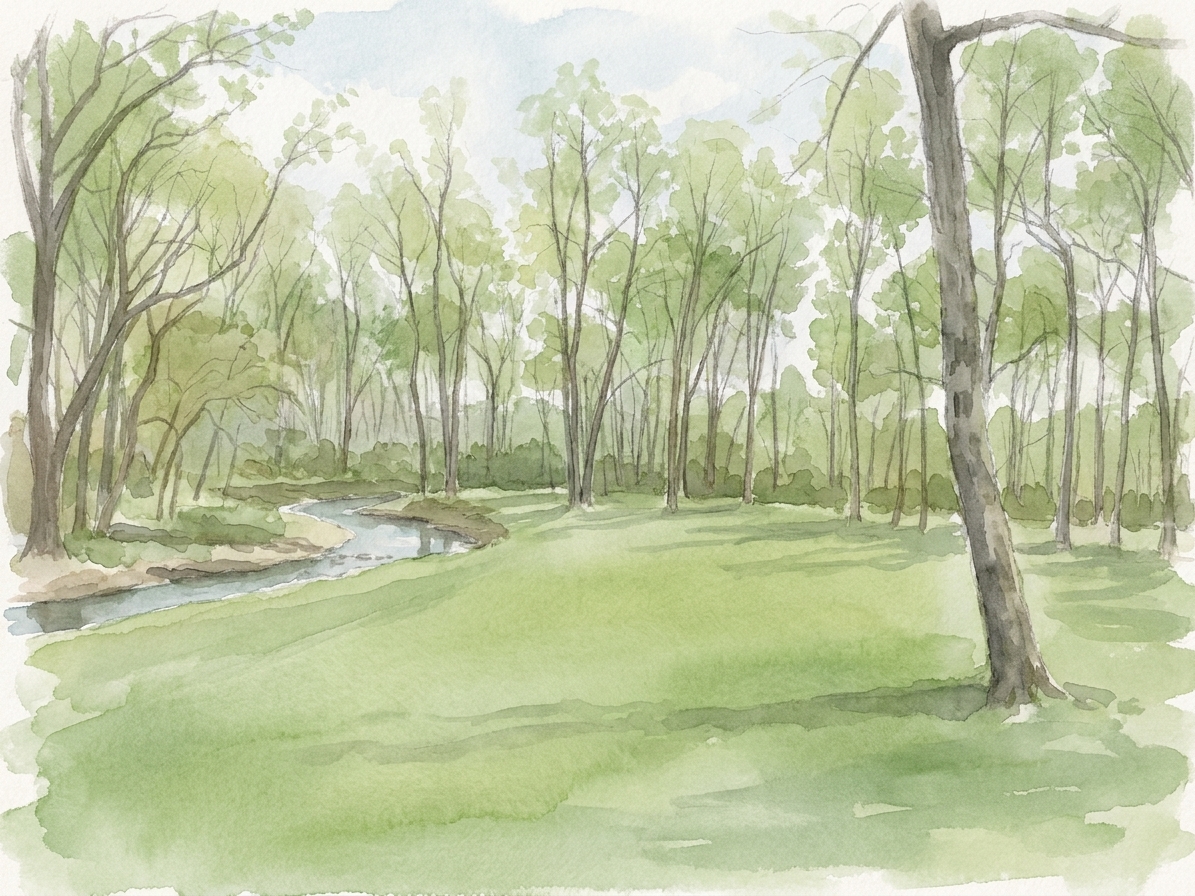
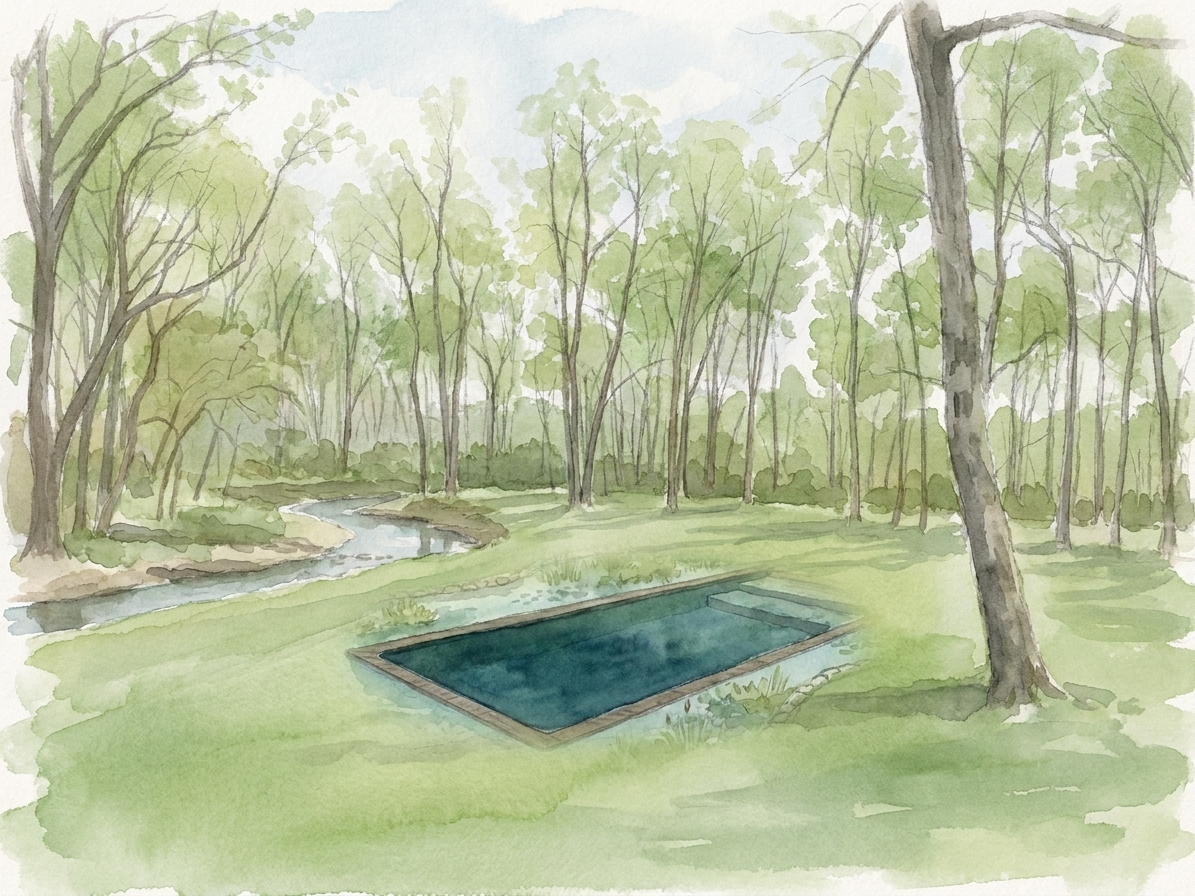
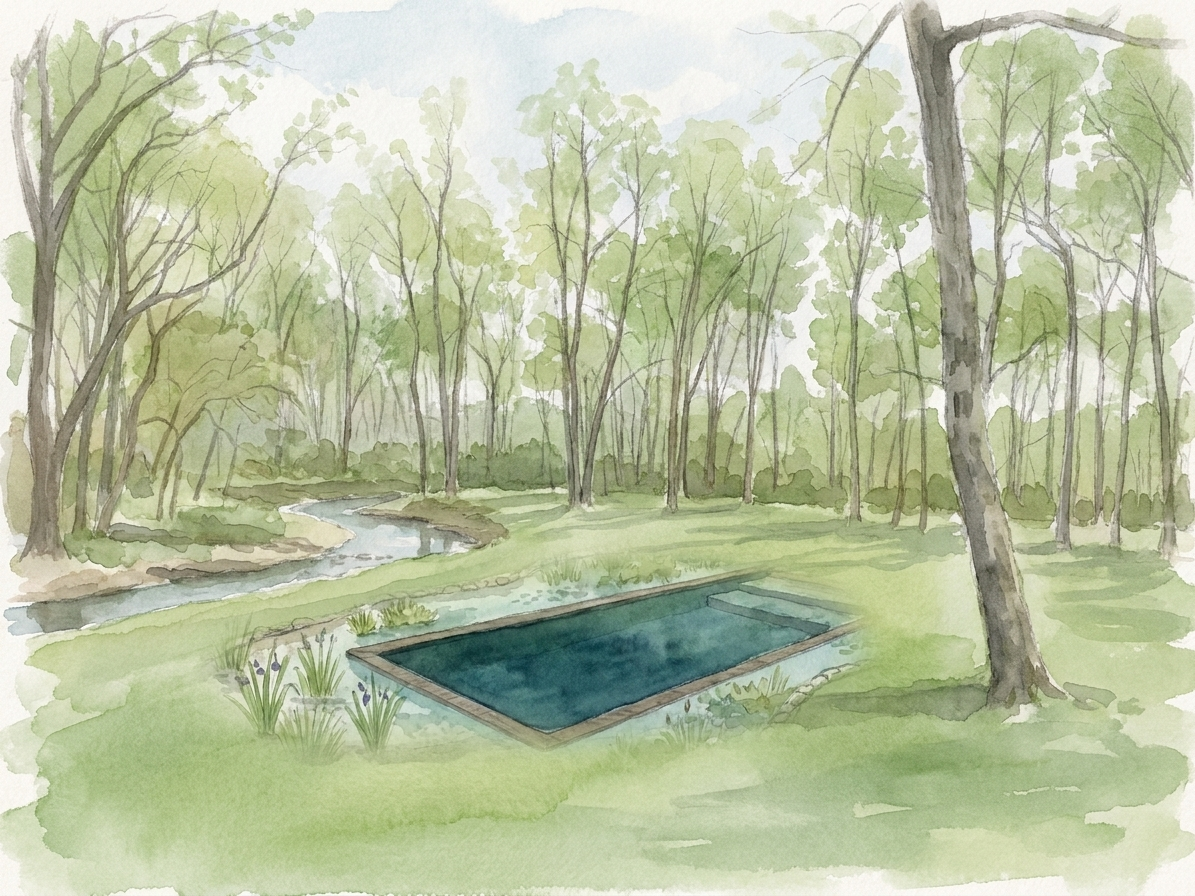
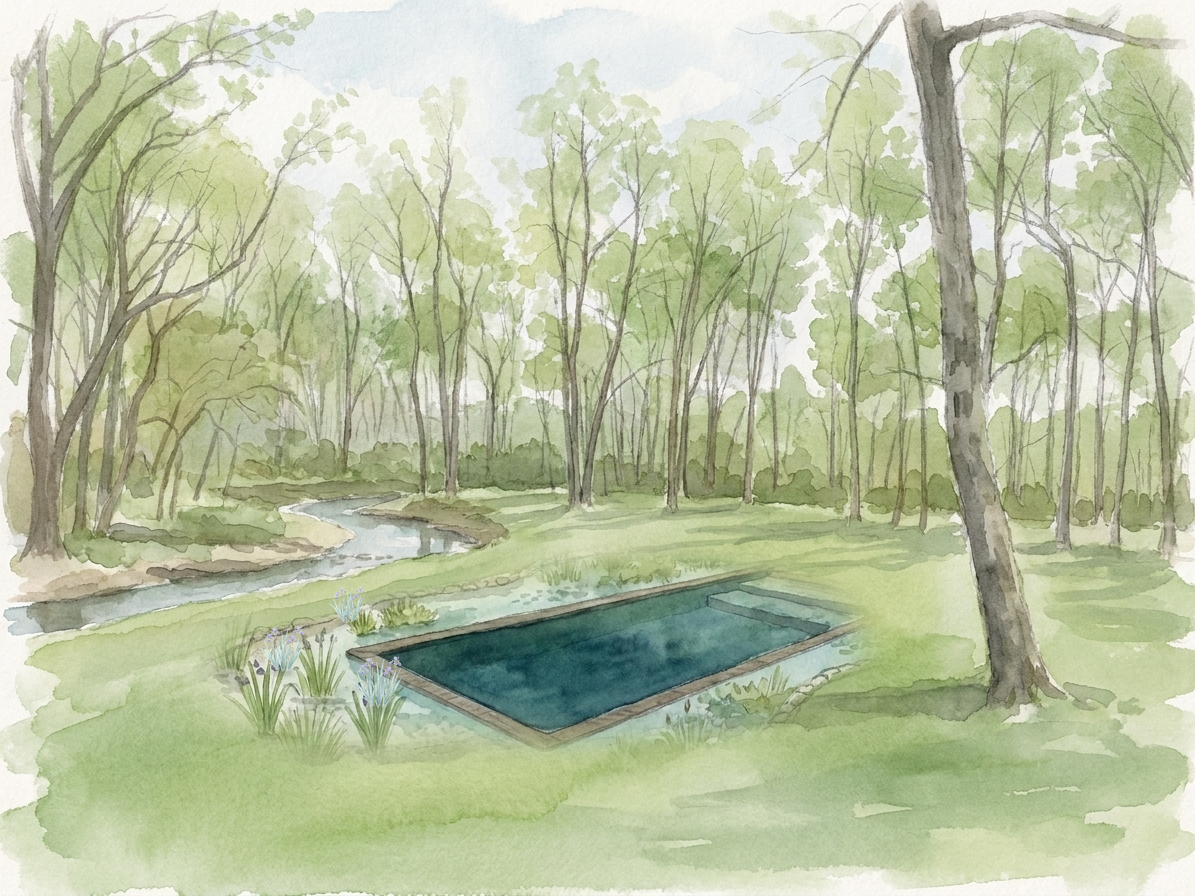
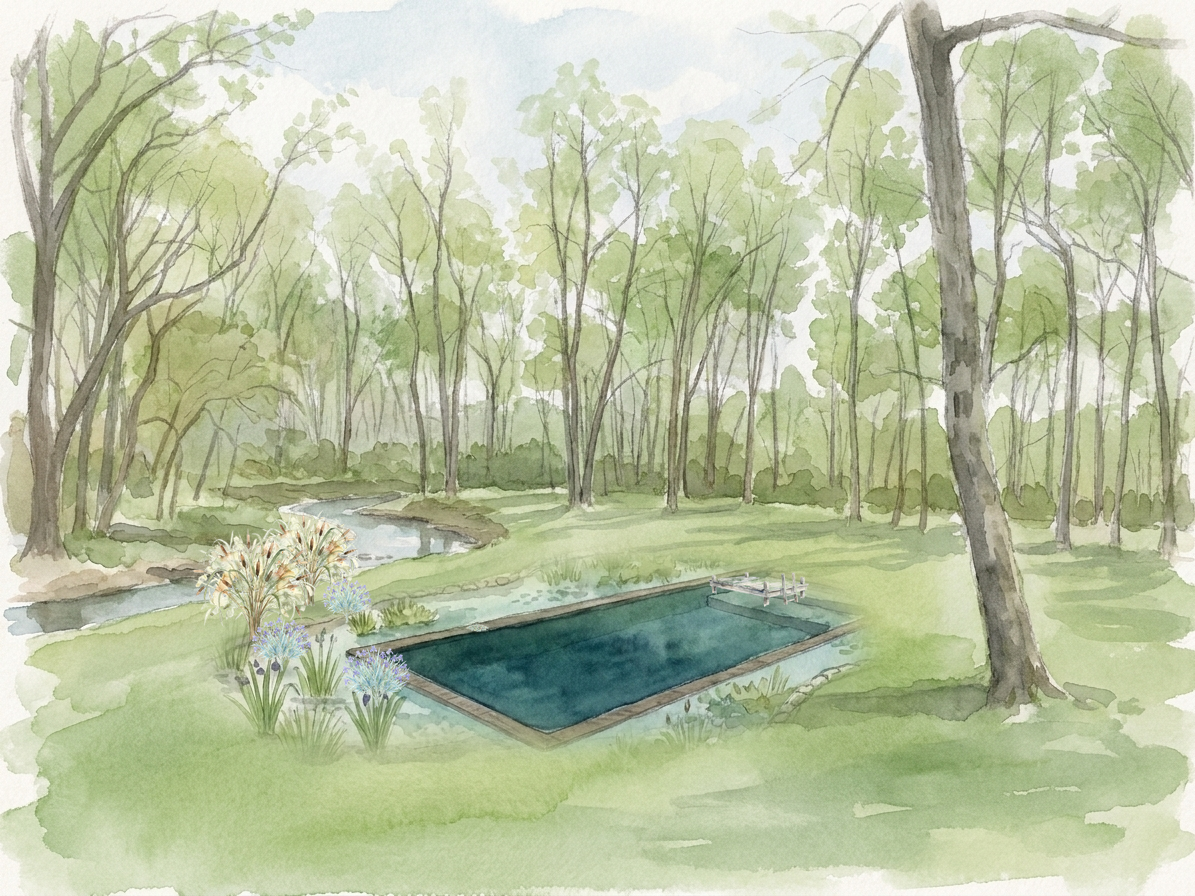
Three rocks before one plant
Start with stone: an odd-numbered boulder arrangement, each rock buried a third deep with its best face to the main viewpoint. The rocks are the mountains of the composition and everything else refers to them. If the stones are right, the garden already works before a single plant goes in.
One specimen, given room
A single Japanese maple, placed off-center with clear space around it, does more than twenty foundation shrubs. The design protects that clarity: low groundcover as the moss layer, clipped boxwood as supporting masses, and emptiness on purpose. Resist symmetry everywhere; the triangle, not the row, is the organizing shape.
Borrow, frame, conceal
Classic technique: frame a view you want (the neighbor's birch counts as borrowed scenery), conceal what you do not with a fence or hedge, and never show the whole garden from one spot. A path that bends behind the maple makes a small yard feel like a sequence of rooms.
Before and after, honestly
Every Painted Acre plan starts from a photo of a real yard and ends with the same view, years grown. No invented dream yard, no stock photos.
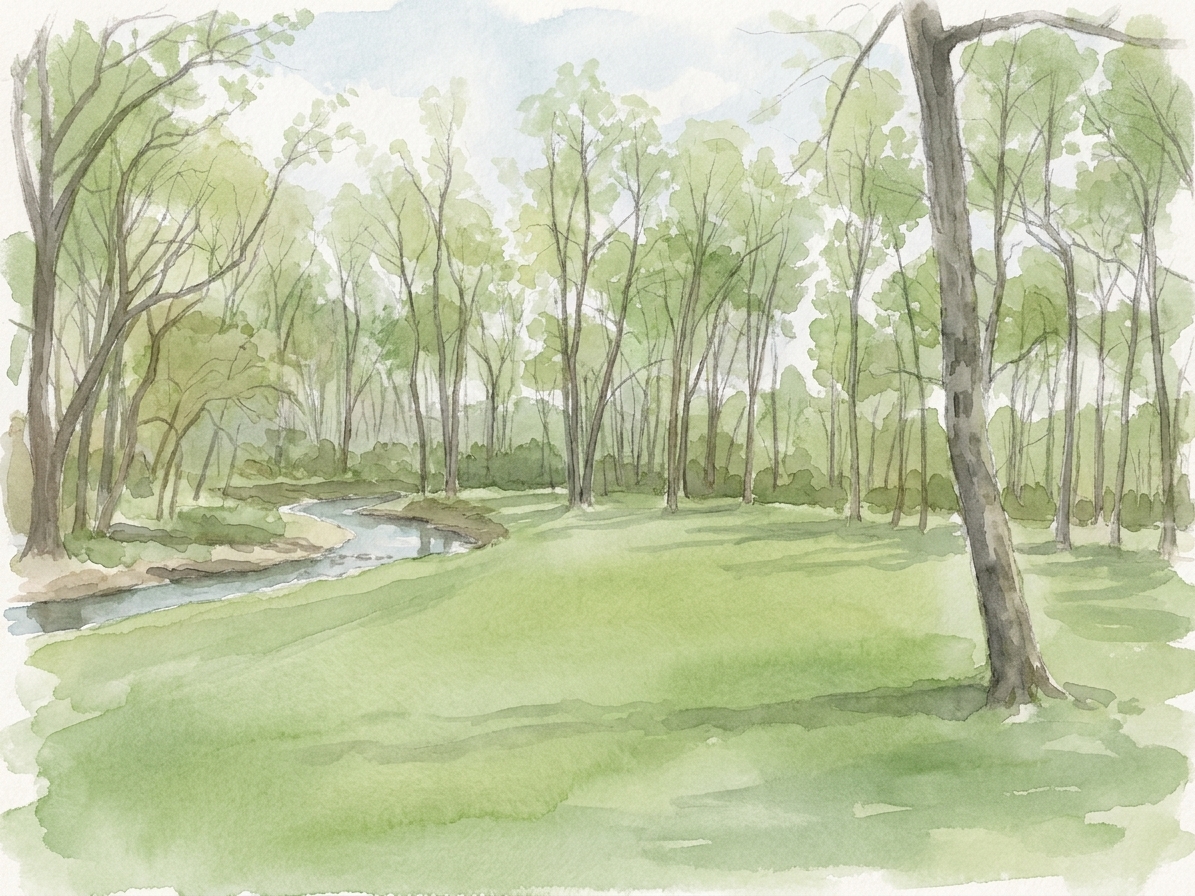
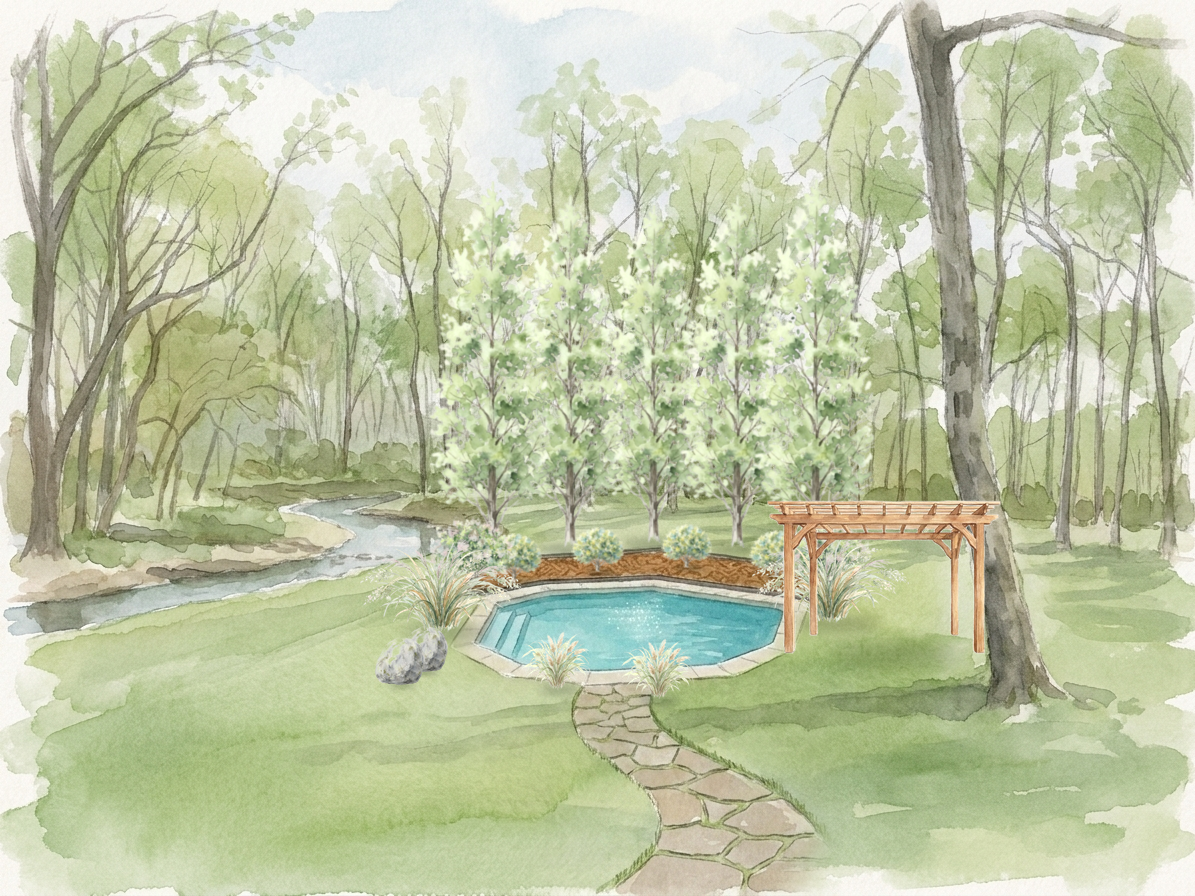
The specimen palette, painted
A short list on purpose: one specimen, supporting evergreens, a carpet, and stone. Each is painted at every age, so the fifteen patient years of the maple are honest in the slider.
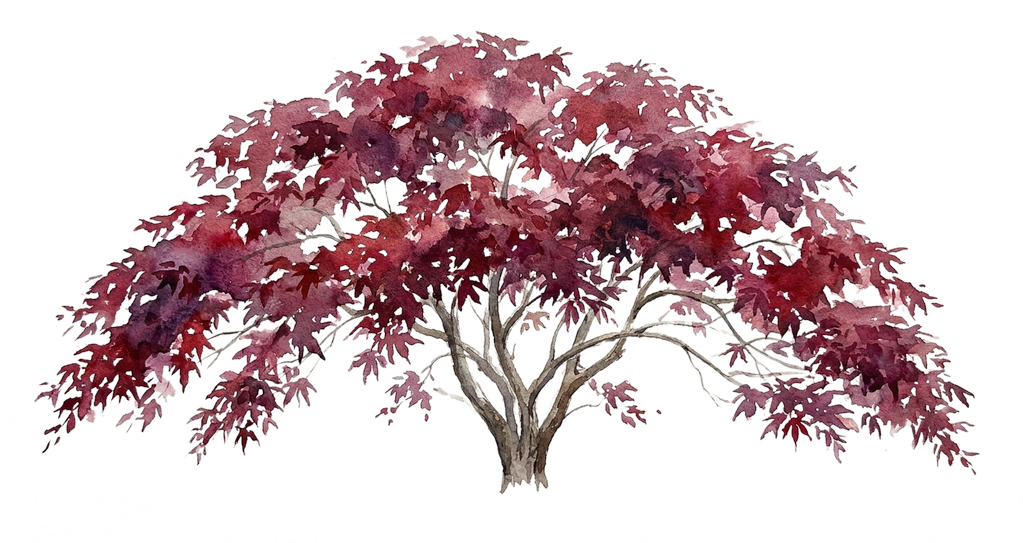
Japanese Maple
The specimen. Fifteen patient years to a perfect silhouette, and worth every one.
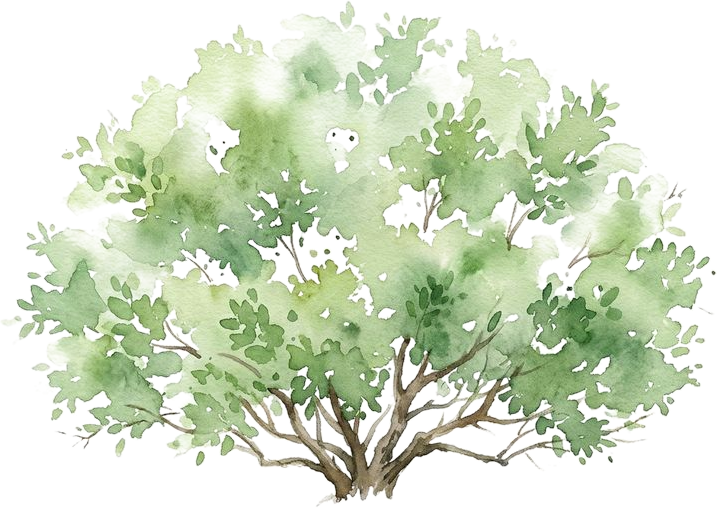
Boxwood
Clipped cloud masses that play the supporting role evergreens should.
Blue Star Juniper
A slow silver-blue mound for the rock garden edge.
Ajuga
The moss stand-in: a dark low carpet between stones.
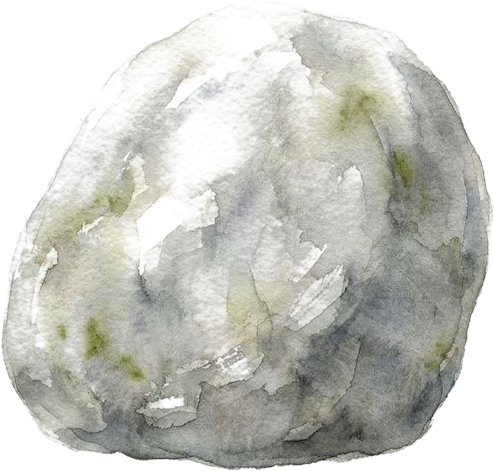
Boulder
Buried, odd-numbered, best face forward. The mountains.
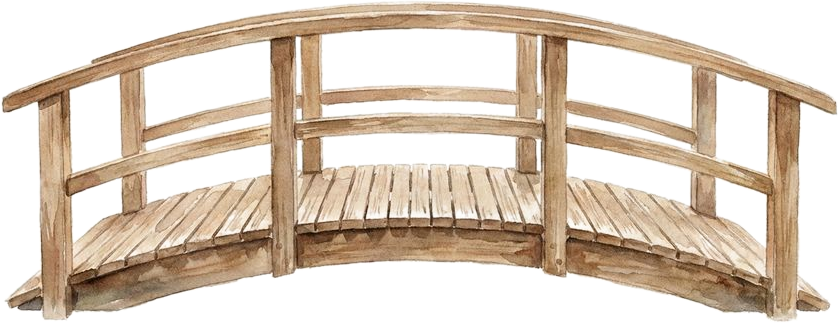
Wooden Footbridge
Even over a dry stream, the crossing makes the journey.
Questions people ask
▸Can I make a Japanese garden in a small backyard?
Small is the native format. A 200 square foot corner with three stones, one maple, clipped evergreen masses, and groundcover is more authentic than an acre of scattered ornaments. Concealment tricks make small feel larger.
▸What plants do I need for a Japanese-style garden?
Fewer than you think: one specimen maple, evergreen structure like boxwood or juniper, a moss-like groundcover, and perhaps a border grass. The style is defined by placement and restraint, not by a species checklist.
▸Do I need a koi pond?
No. A dry stream of stone with a footbridge gives the water gesture with zero maintenance, and it is the traditional solution where water is impractical.
▸How do I keep it from looking like a theme park?
Skip the lanterns-everywhere approach. One stone accent maximum, asymmetry everywhere, and let the maple and rocks do the talking. Restraint is the style.
What this is, and is not: Painted Acre produces an illustrative watercolor design plan: placement, plant choices, and an honest picture of growth over time. It is not an architectural, engineering, or construction document. For anything that involves excavation, water, structures, or grading, bring the plan to a qualified contractor or landscape professional and verify measurements, utilities, and local codes first.
Related scenarios
 Garden styles
Garden design tool
Not a themed garden, not a landscaping project: a garden. Flowers, shrubs, a bed with a good shape, …
watercolor · shade garden ShadeShade garden design tool
The dark strip under mature trees is where lawns go to die and where the best gardens begin. Shade g…
watercolor · xeriscape front yard Low water and xeriscapeXeriscape front yard design tool
Xeriscaping fails in one of two directions: the gravel moonscape with three sad shrubs, or the "low …
 Water features
Natural swimming pond design tool
A natural swimming pond is a swimming hole and a wetland in one: a deep clear zone for you, a shallo…