Vegetable garden design tool
A good vegetable garden is a little room: raised beds in rows, paths you can push a wheelbarrow down, and a fence that means it. The vegetables change every season; the frame is what you are really designing. Painted Acre paints your yard photo into a watercolor, lets you place the fenced garden where the sun actually falls, and shows the frame settling into the yard year after year.
No account needed. The studio opens with this scenario ready to go.
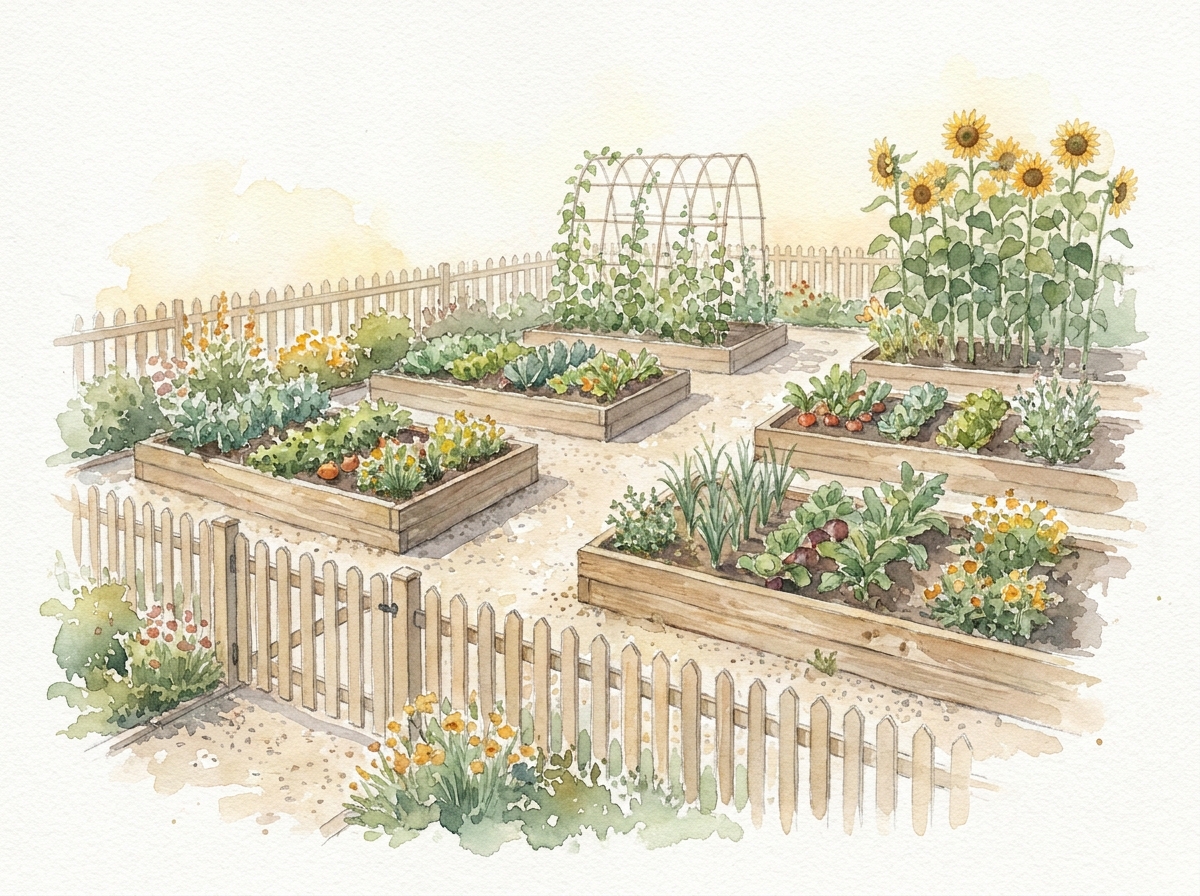
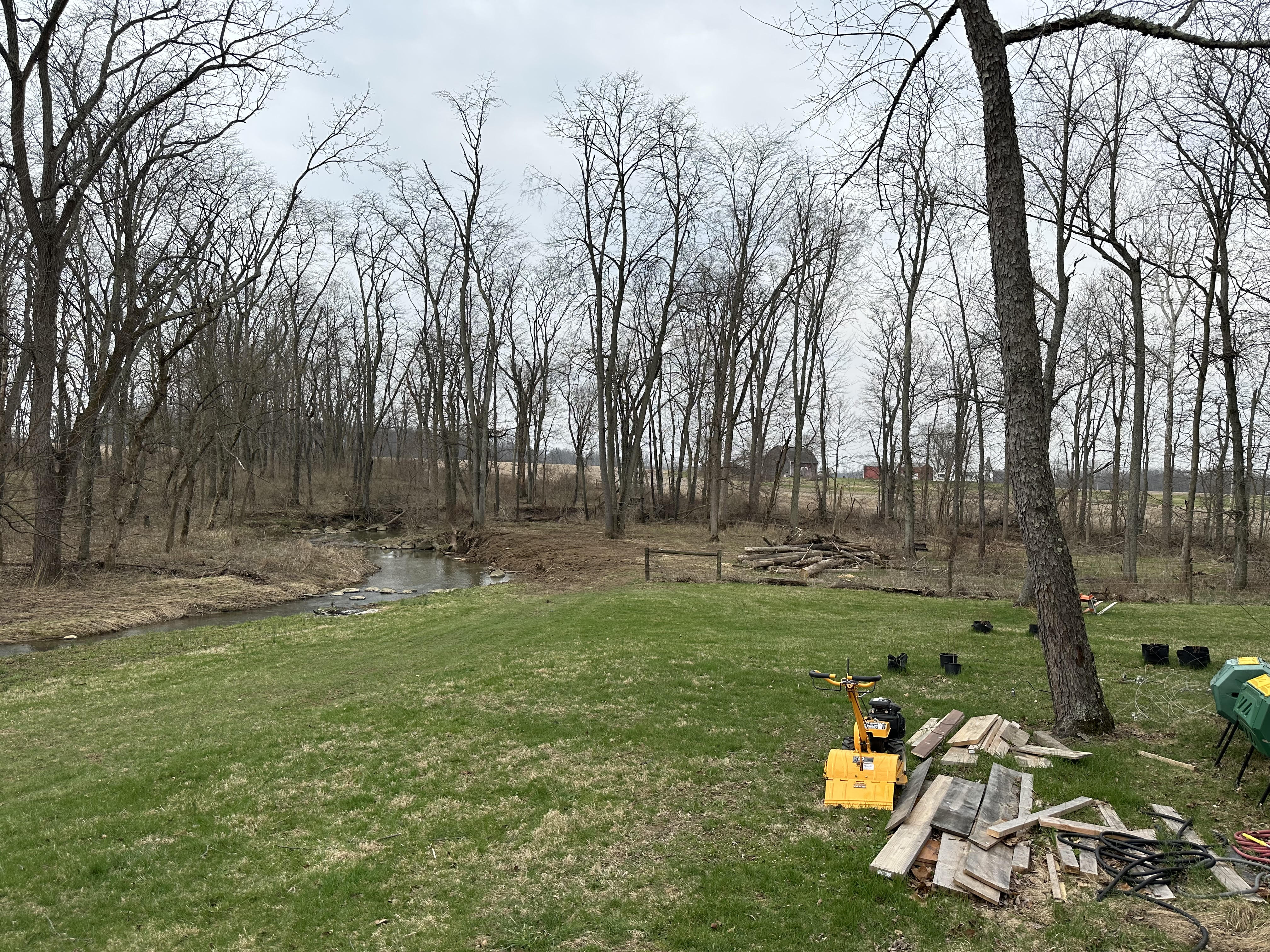
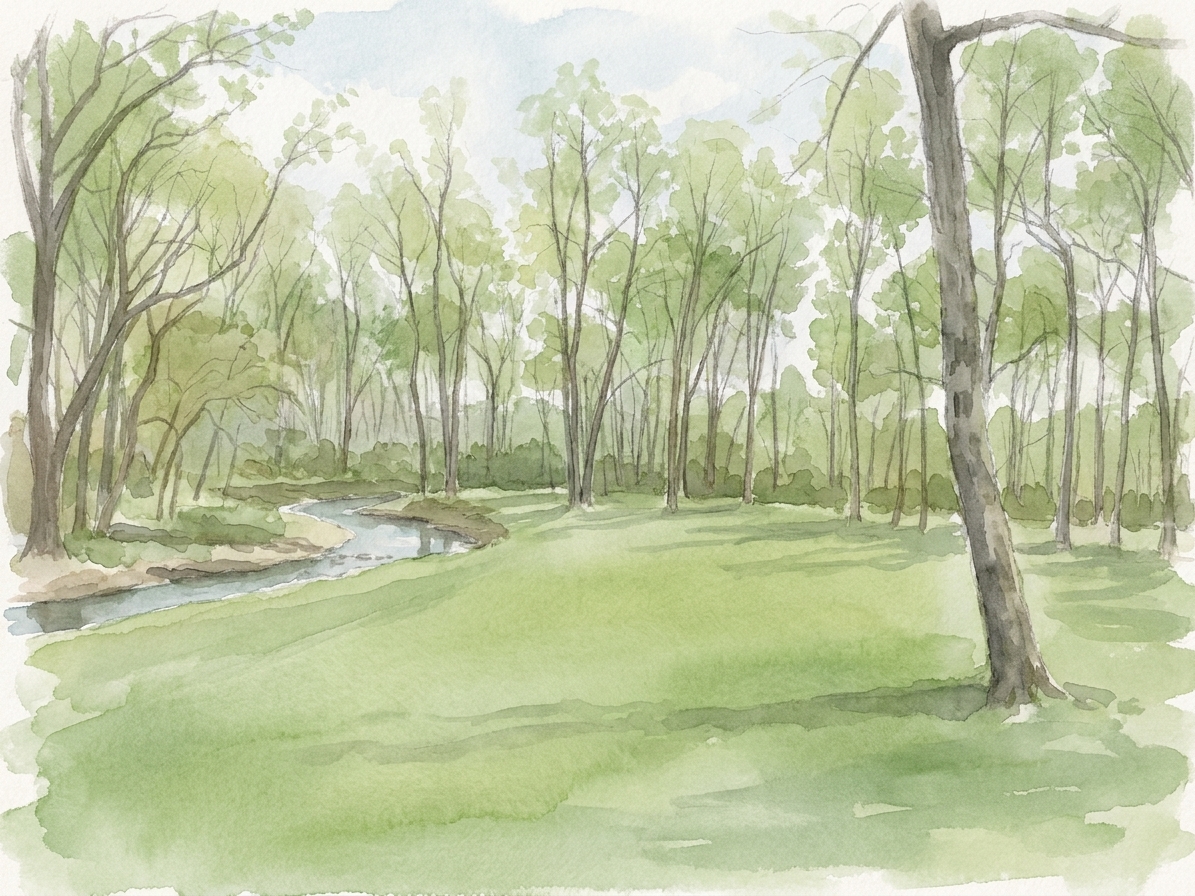
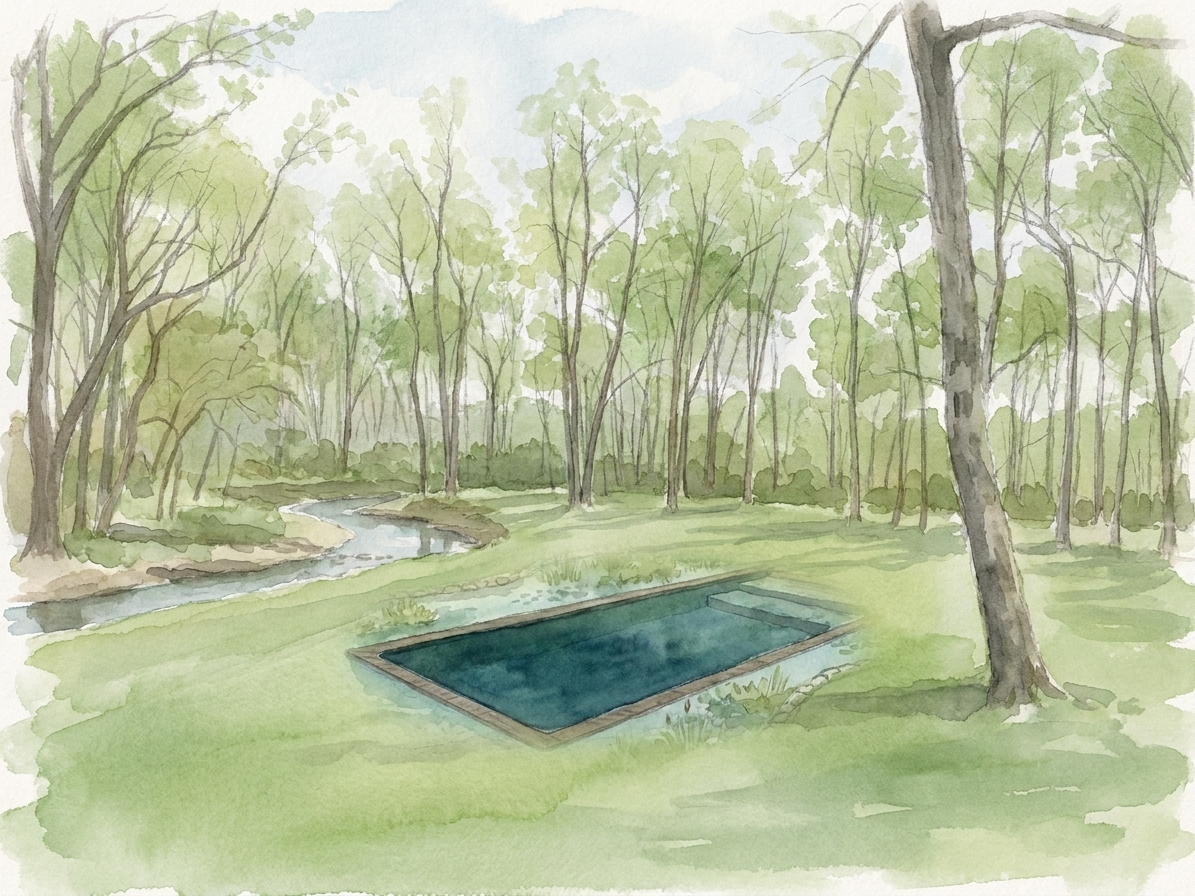
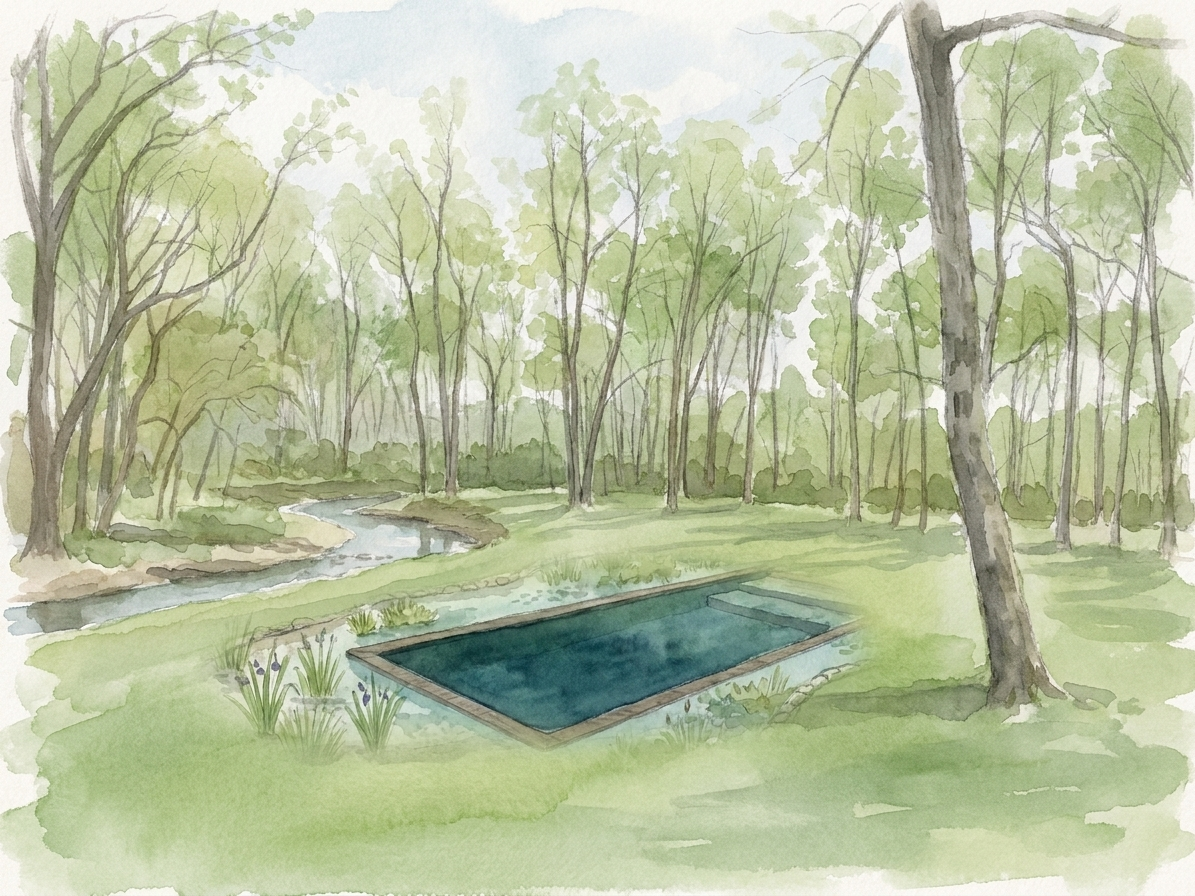
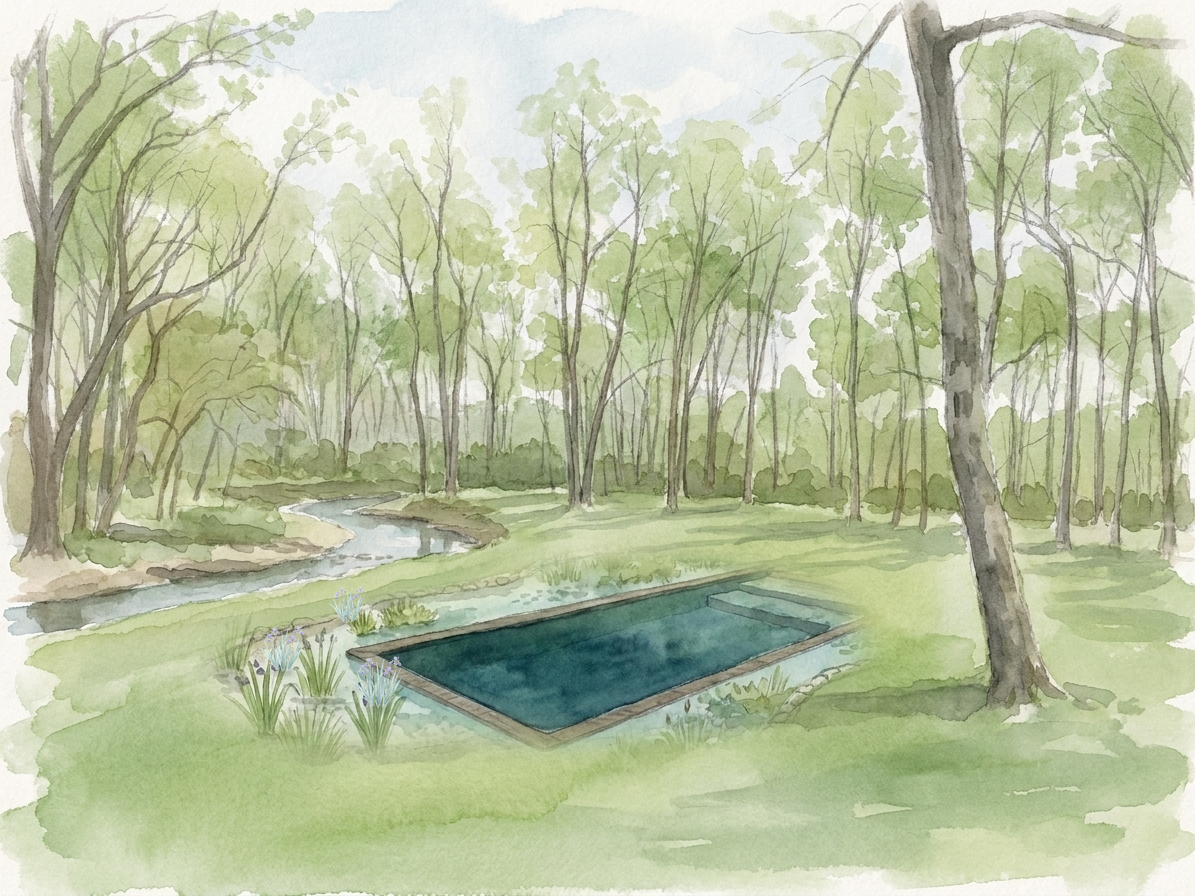
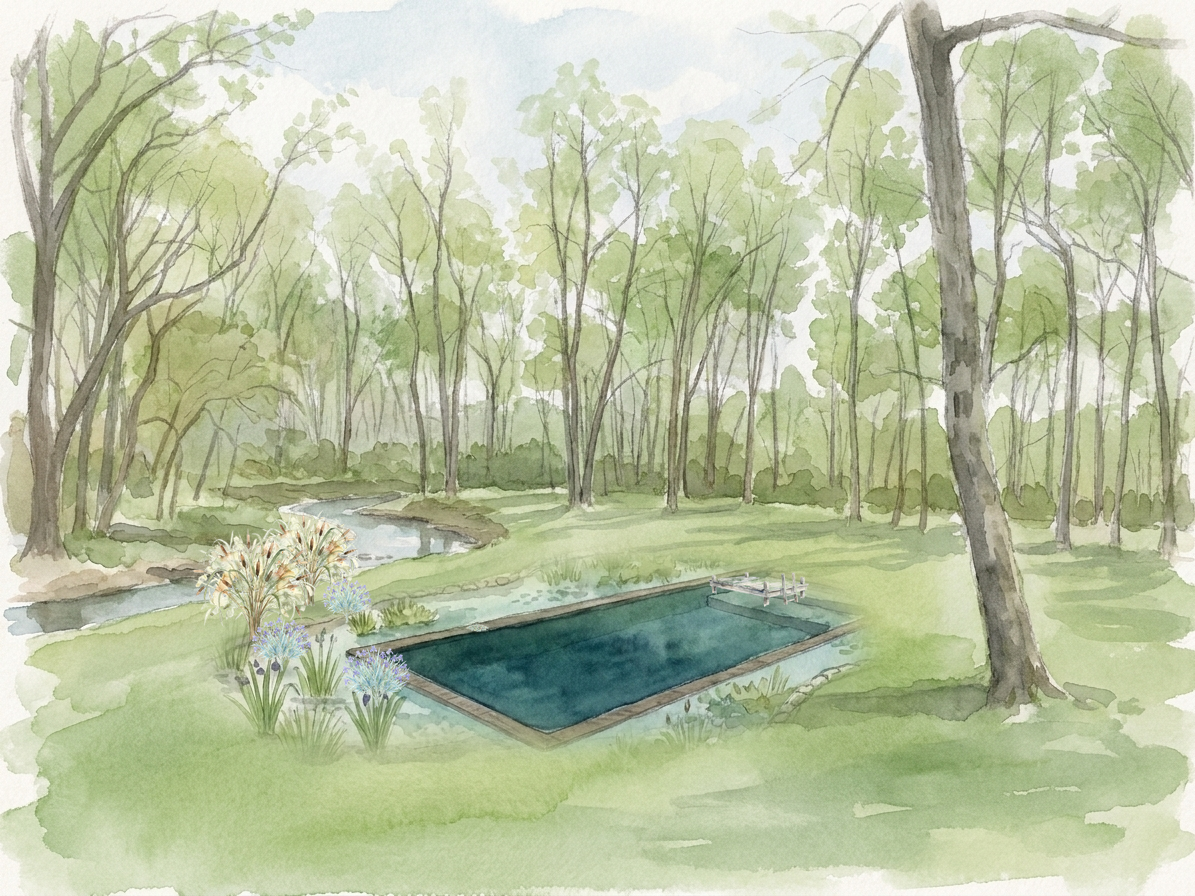
Raised beds first, and keep them reachable
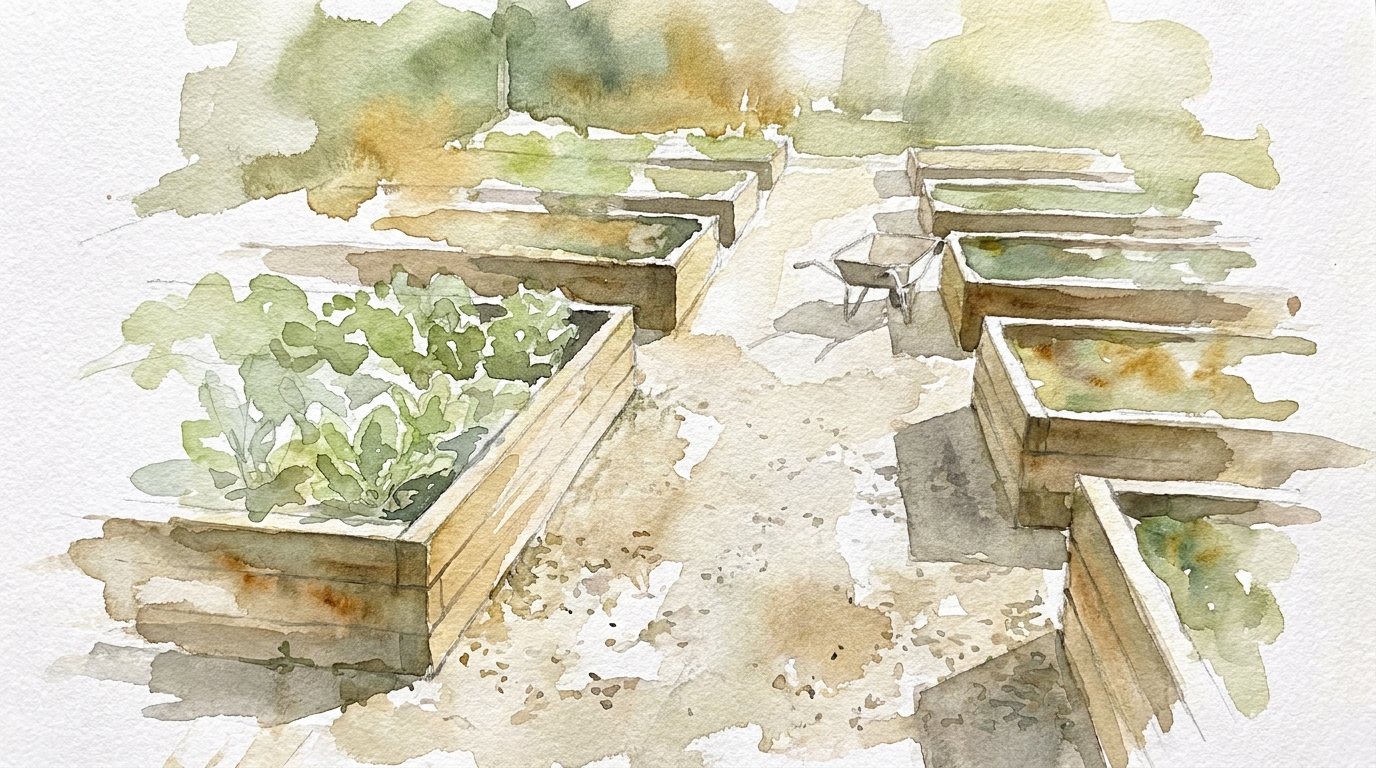
A raised bed should never be wider than 4 feet, because you plant and weed from both sides and never step in it. Stepping in the bed compacts the soil, and compacted soil is why second-year gardens disappoint. Length is whatever fits; 8 feet is the classic. Leave 2 feet between beds at minimum, and make the main path 3 feet so a loaded wheelbarrow rolls through without clipping corners. Laid out on a painting of your actual yard, the bed math stops being abstract.
The fence is part of the garden, not around it
Ask anyone who skipped it: an unfenced vegetable garden is a wildlife feeding station. A waist-high picket fence with wire mesh buried a few inches at its base stops rabbits and groundhogs cold, and it turns the garden into a destination the way nothing else does. Where deer pressure is real, go taller or add a second low fence a few feet outside the first; deer will not jump into what reads as a trap. Give the gate a full 3 feet and put something overhead: an arbor makes an entrance out of an opening.
Put it where the sun and the kitchen agree
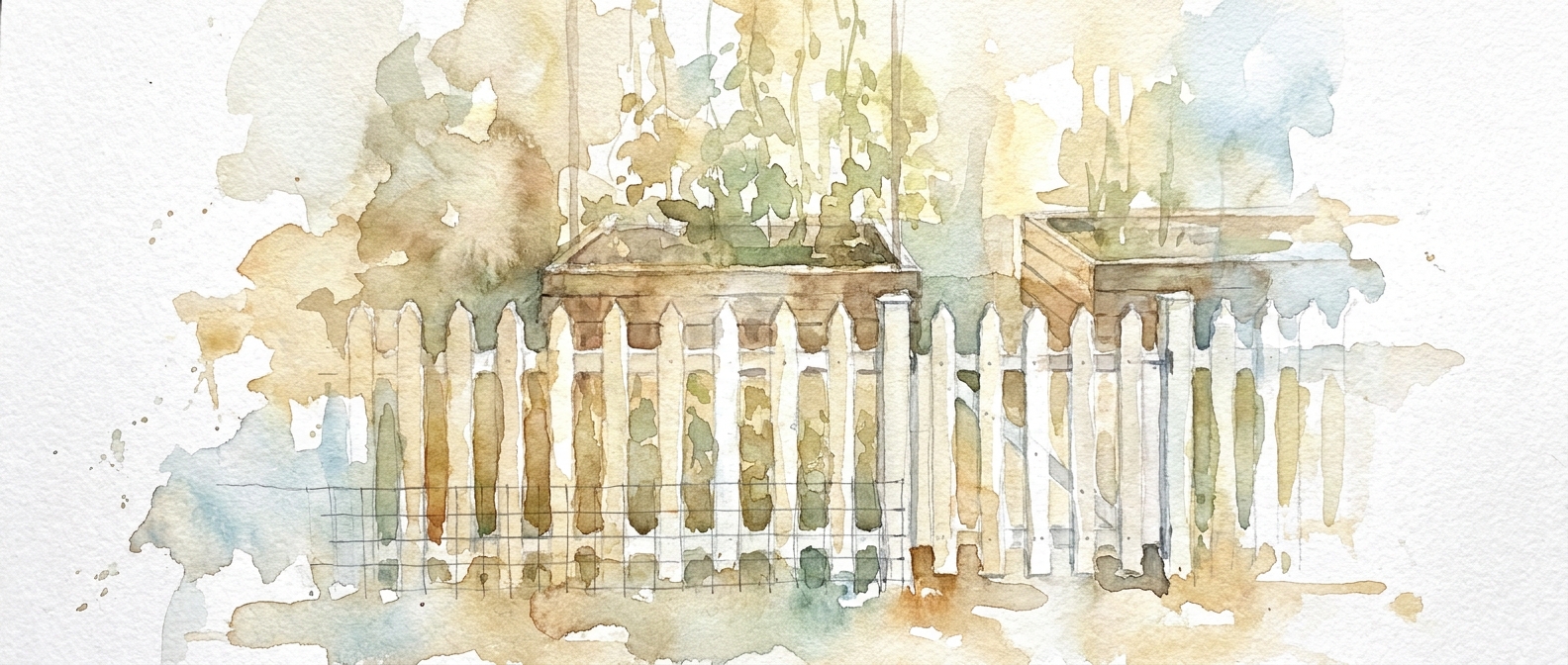
Vegetables want 8 hours of full sun, which rules out more spots than most people expect. Watch the yard for a day, then favor the sunny spot closest to the kitchen door and a hose bib, because a garden you walk past daily gets weeded, watered, and harvested, and a garden at the back fence gets remembered in August. Keep clear of tree roots too; the trees in your photo are honest about where their shade falls.
Before and after, honestly
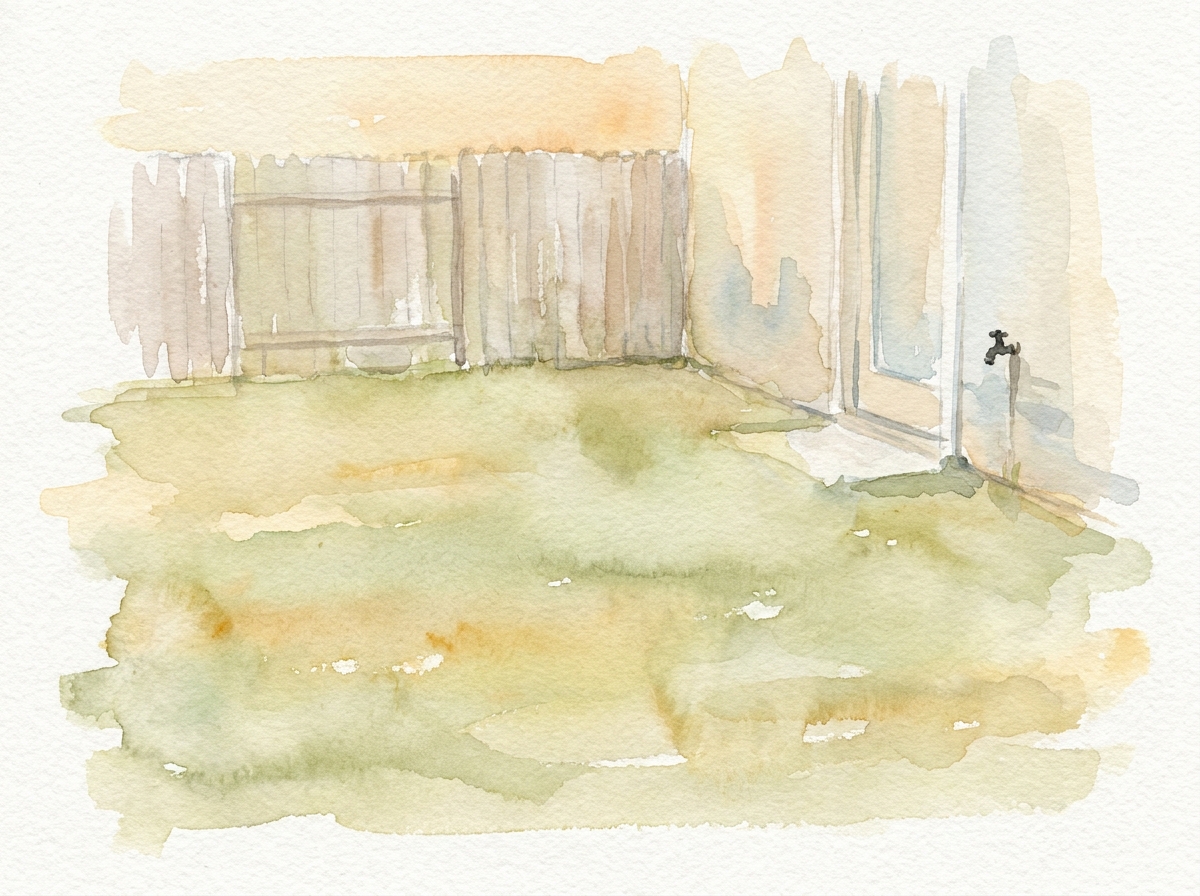
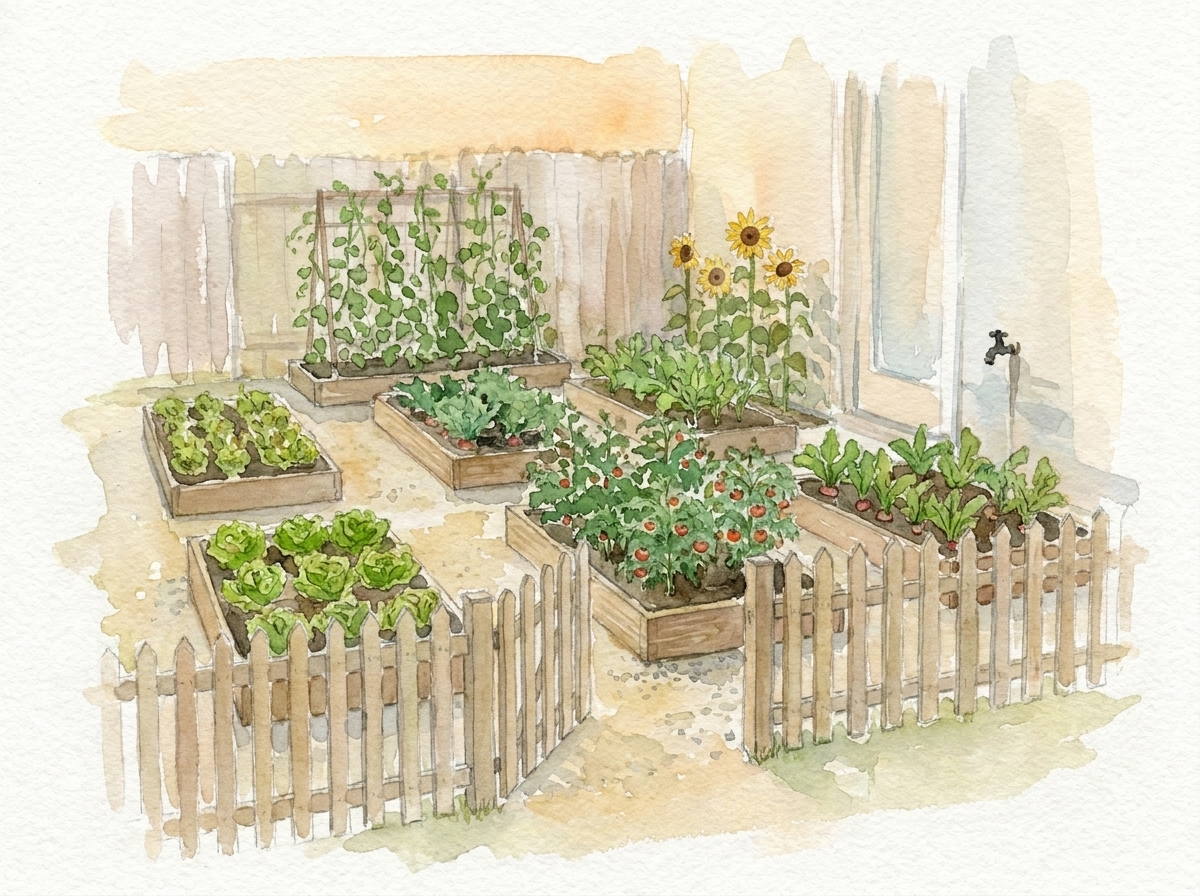
Every Painted Acre plan starts from a photo of a real yard and ends with the same view, years grown. No invented dream yard, no stock photos.
Your yard is a plan, not a weekend
Real projects happen across years: maybe you raise privacy mounds and plant the slow shade trees first, and the water waits for year three. In Painted Acre, every plant and structure carries its own year, the studio builds the scene in phases, and the timelapse shows the whole multi-year plan paying off before you commit to any of it. Here is this sample plan, phase by phase, every frame real product output:
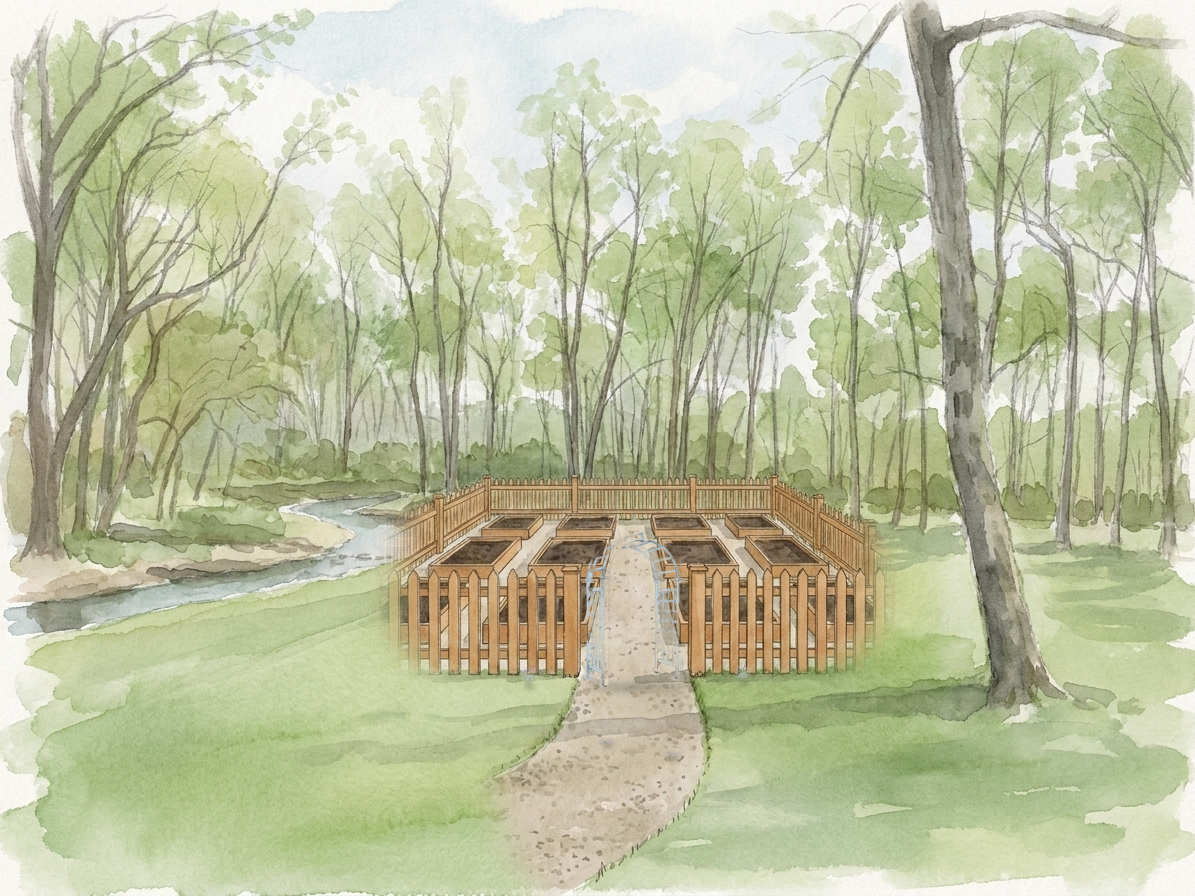
Build the room
Fence, gate, raised beds, and paths go in over a weekend or two. The garden is fully usable its first spring.
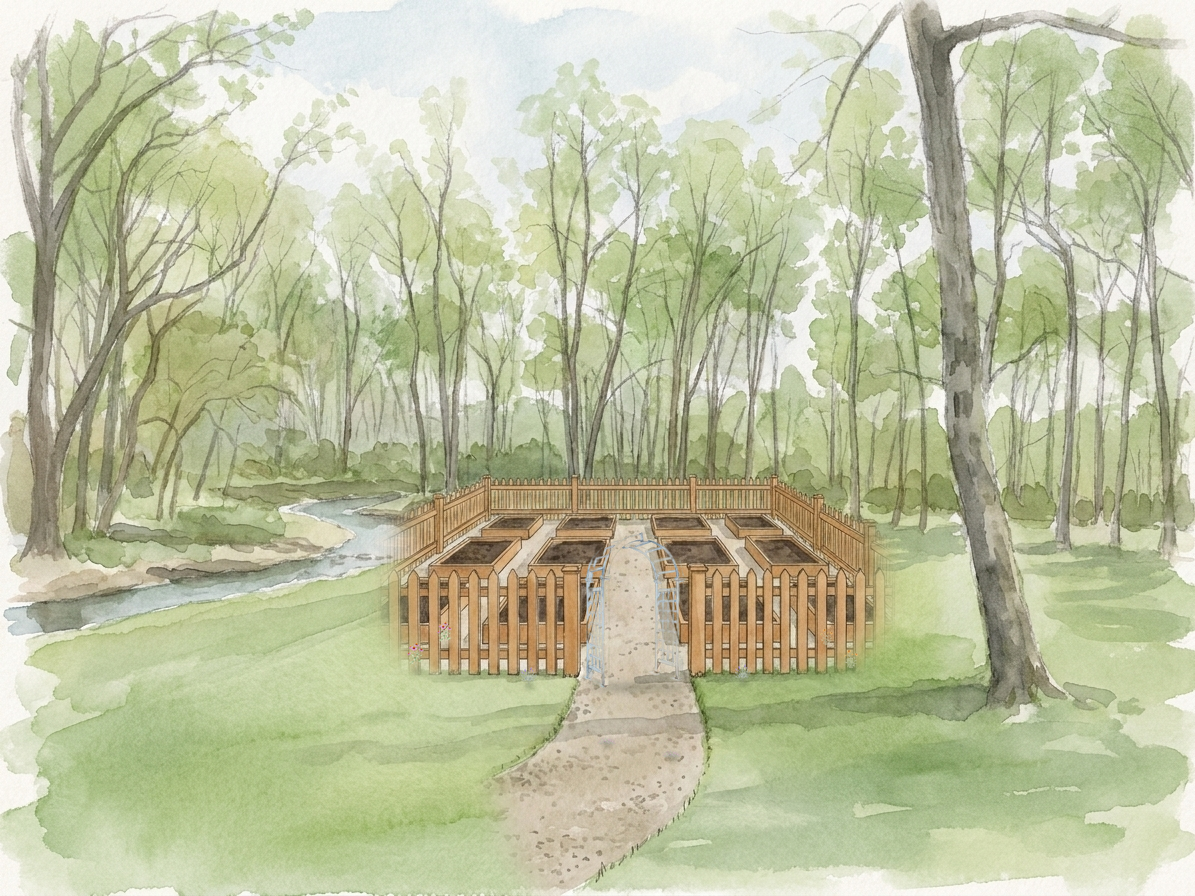
Plant the guards
Lavender against the pickets and pollinator drifts beside the fence: the companions that protect and pollinate the crops.
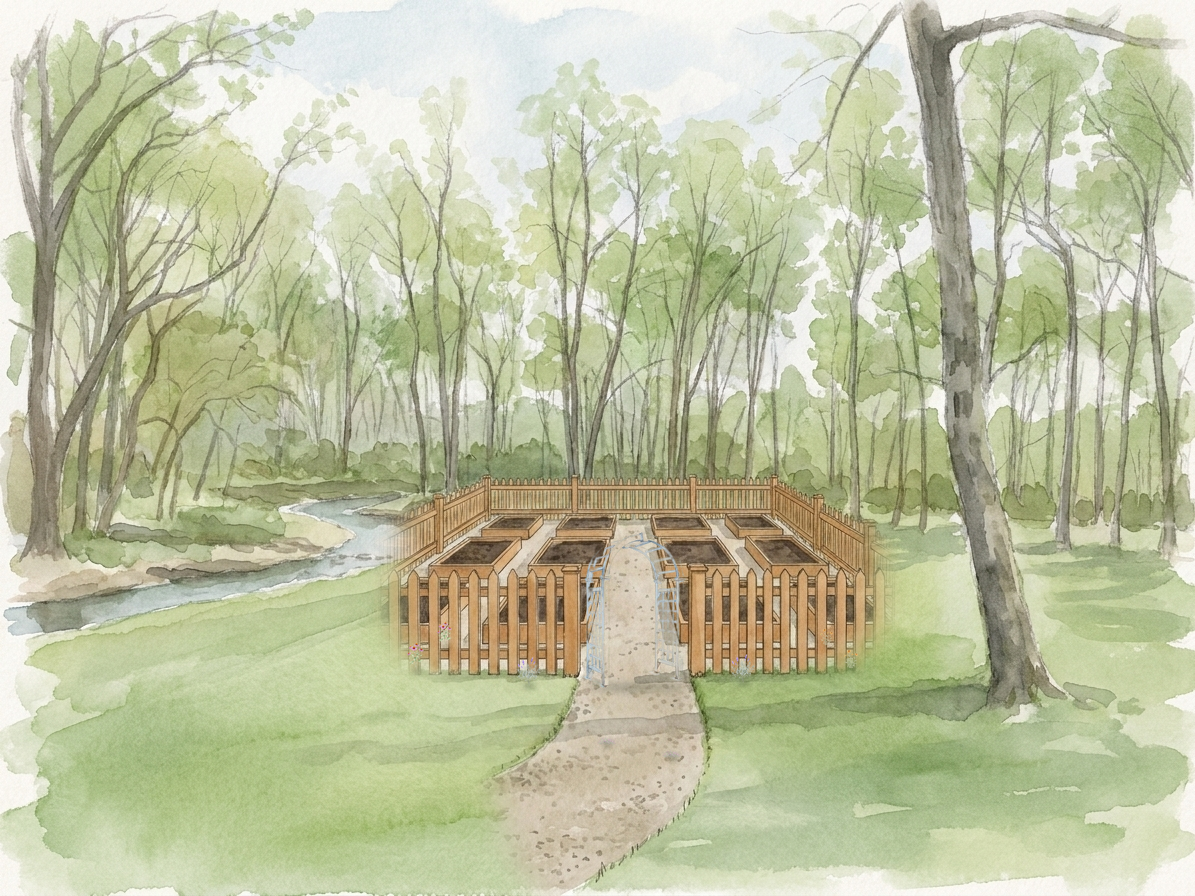
The frame softens
Thyme creeps over the path edges and the cedar grays toward silver.
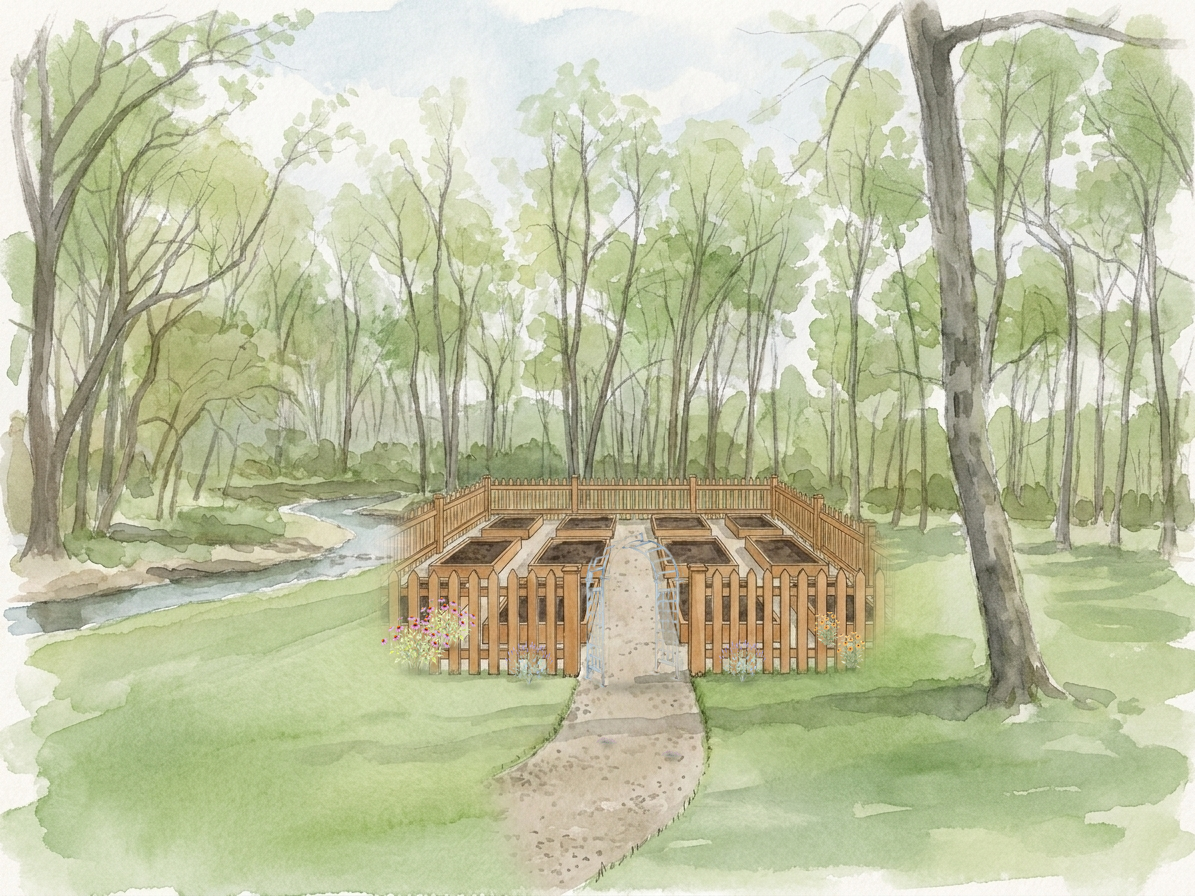
It belongs to the yard
The fence has weathered in, the drifts are full, and the beds have fed you ten seasons.
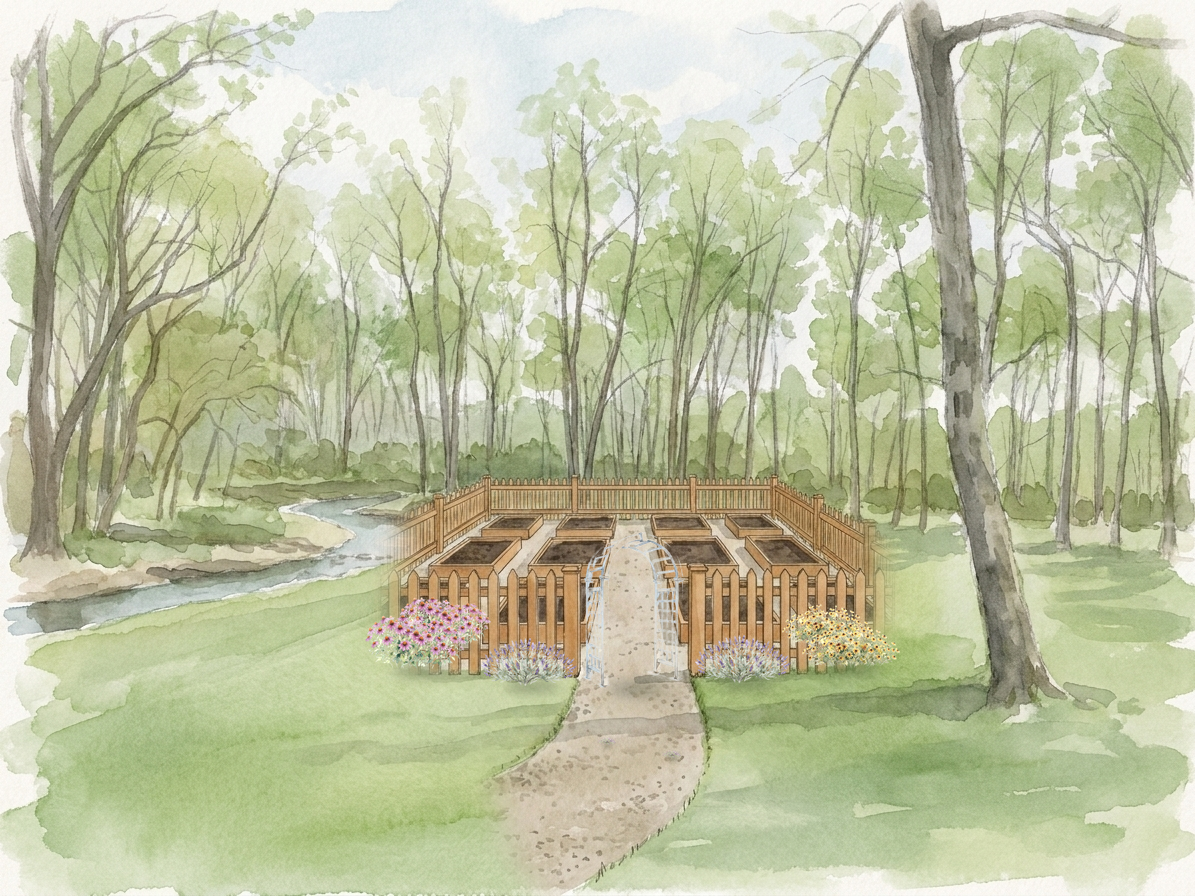
The permanent kitchen
Twenty seasons in, the garden is infrastructure: the most productive few hundred square feet on the property.
Change any year in the studio and the whole timeline repaints. Budgets like phases too: the printable report groups the shopping list by year.
The kitchen garden palette, painted
The crops rotate every season, so what you design is the permanent frame: beds, fence, gate, and the companions that guard and pollinate it. Each piece is painted at every age, and your ZIP filters the plants to your zone.
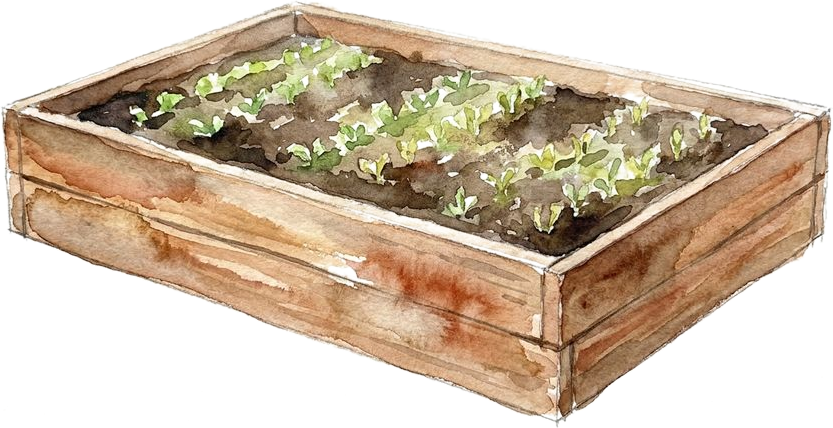
Raised Veggie Bed
The unit of the whole garden: fill it once, never step in it.
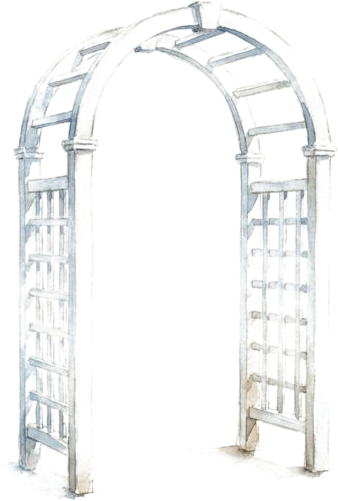
Garden Arbor
Three feet of gate plus something overhead. An entrance, not an opening.
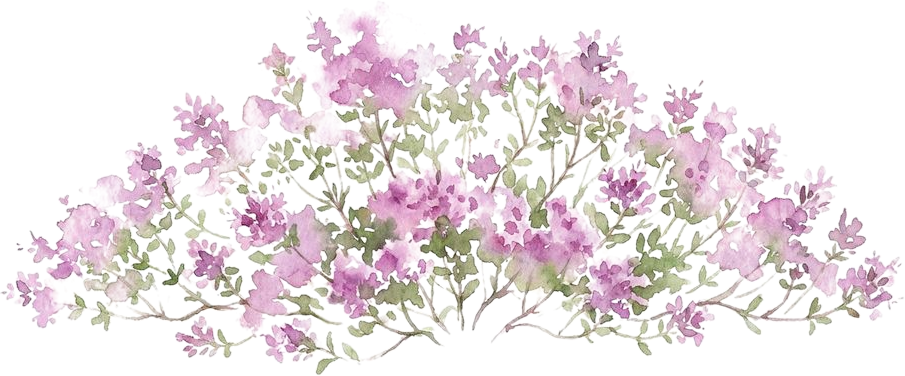
Creeping Thyme
Walkable herb for the path edges; smells like dinner on the way in.
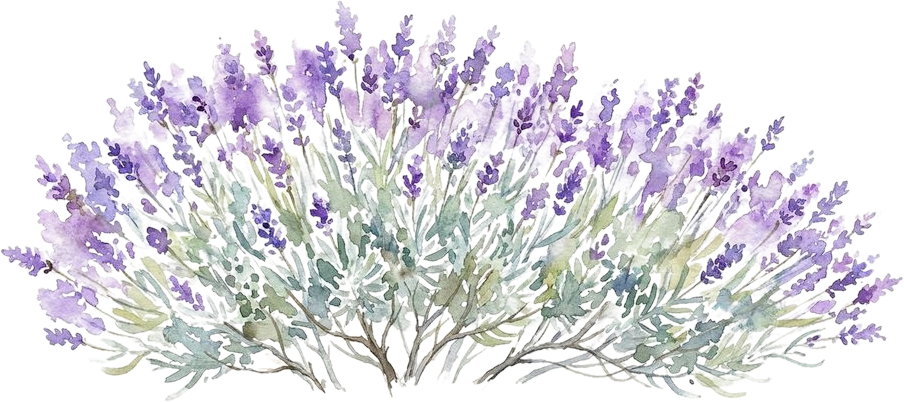
Lavender
The pest-confusing border: rabbits and deer dislike it, bees love it.
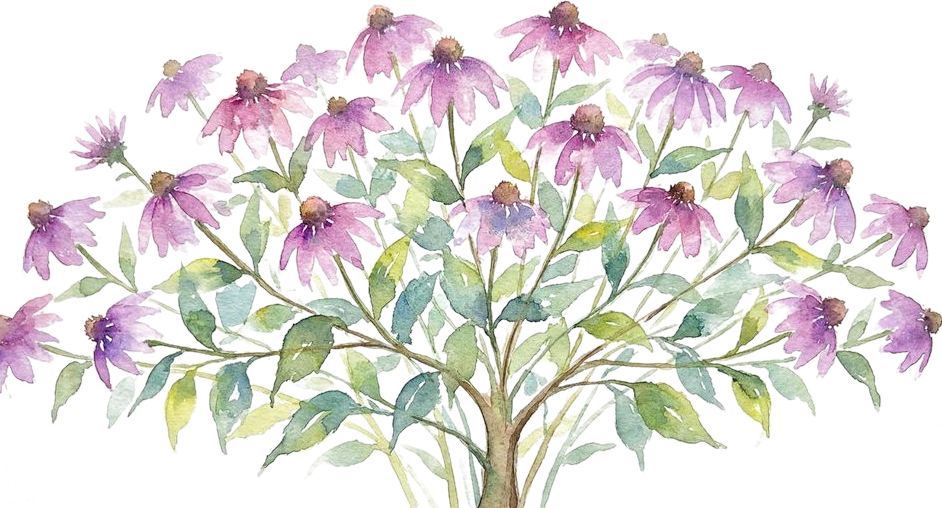
Purple Coneflower
A pollinator drift beside the garden pulls the bees your squash needs.
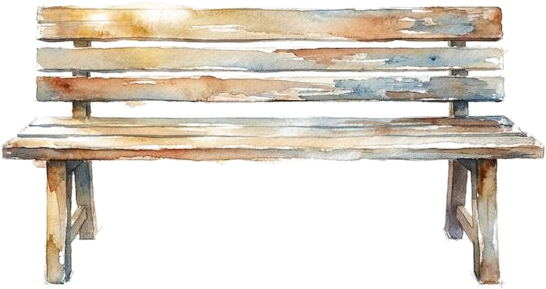
Garden Bench
Harvest-season seating. You will use it more than you think.
Questions people ask
▸How big should a vegetable garden be?
Four 4x8 raised beds, about 200 square feet of garden, keeps a family in vegetables all summer with weekends left over. Start smaller than your ambition: two beds well tended beat six abandoned. Drawing it to scale on your yard photo shows what actually fits before you build anything.
▸What fence keeps animals out of a vegetable garden?
A waist-high picket fence with wire mesh buried at the base handles rabbits and groundhogs, which cause most losses. Deer are honest about their abilities: they clear 6 feet easily, so in real deer country you either go 7 to 8 feet tall or run a second low fence a few feet outside the first, which deer refuse to jump into.
▸Why raised beds instead of planting in the ground?
You control the soil completely, it drains well, it warms up weeks earlier in spring, nobody ever steps on the root zone, and weed pressure drops to almost nothing after the first season. Your back also files fewer complaints.
▸Can Painted Acre lay out the garden for me?
Yes. The bed tool has a kitchen garden type that paints the fence, raised beds, and paths as one piece wherever you draw it, and the built-in designer can place the companions around it. Then the year slider shows the frame settling in.
What this is, and is not: Painted Acre produces an illustrative watercolor design plan: placement, plant choices, and an honest picture of growth over time. It is not an architectural, engineering, or construction document. For anything that involves excavation, water, structures, or grading, bring the plan to a qualified contractor or landscape professional and verify measurements, utilities, and local codes first.
Related scenarios
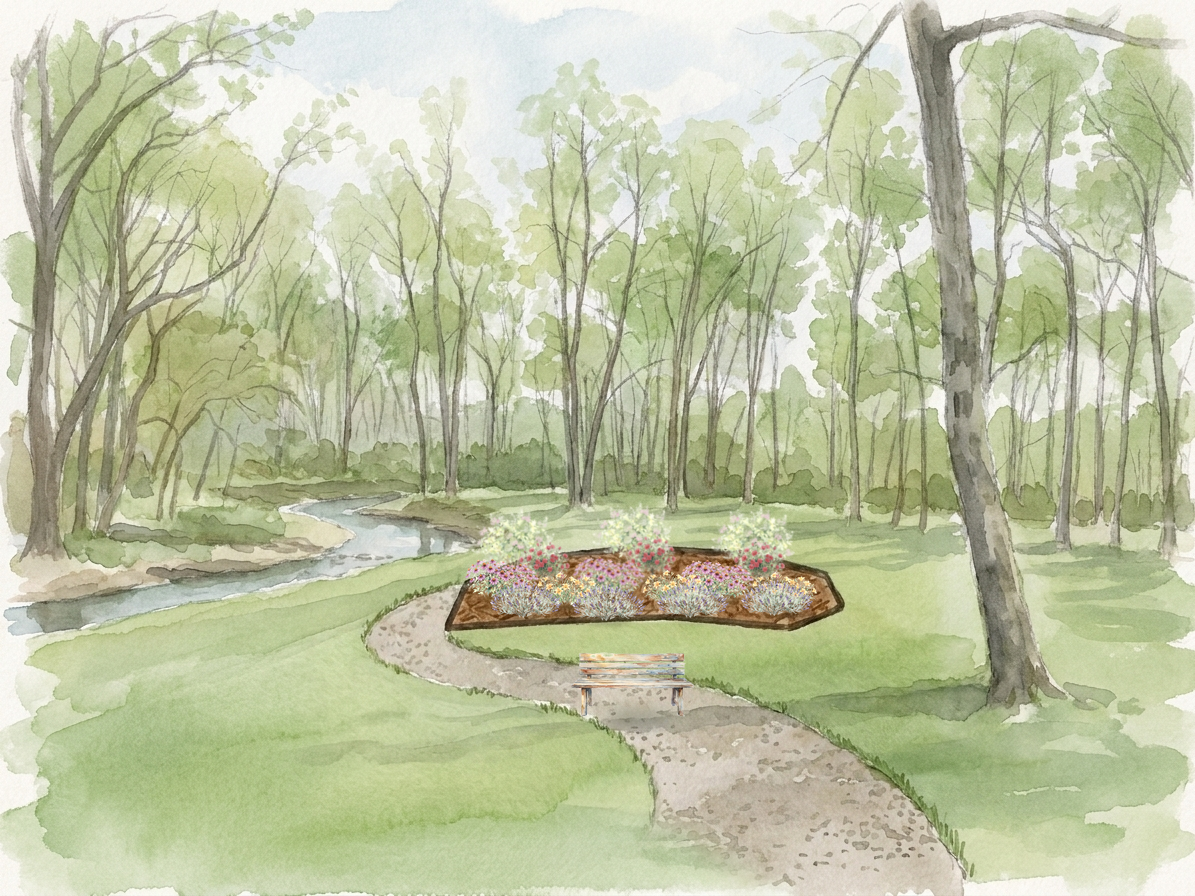 Garden styles
Garden design tool
Not a themed garden, not a landscaping project: a garden. Flowers, shrubs, a bed with a good shape, …
watercolor · backyard food forest Edible and foodBackyard food forest design tool
A food forest is an orchard designed like a woodland: a tall canopy layer, fruiting understory trees…
watercolor · chicken coop garden Backyard homesteadingChicken coop garden design tool
A chicken coop garden treats the coop and run as part of the landscape instead of a shed hidden in t…
watercolor · pollinator garden Native and pollinatorPollinator garden design tool
A pollinator garden succeeds on two things most sketches ignore: drifts big enough for foraging bees…
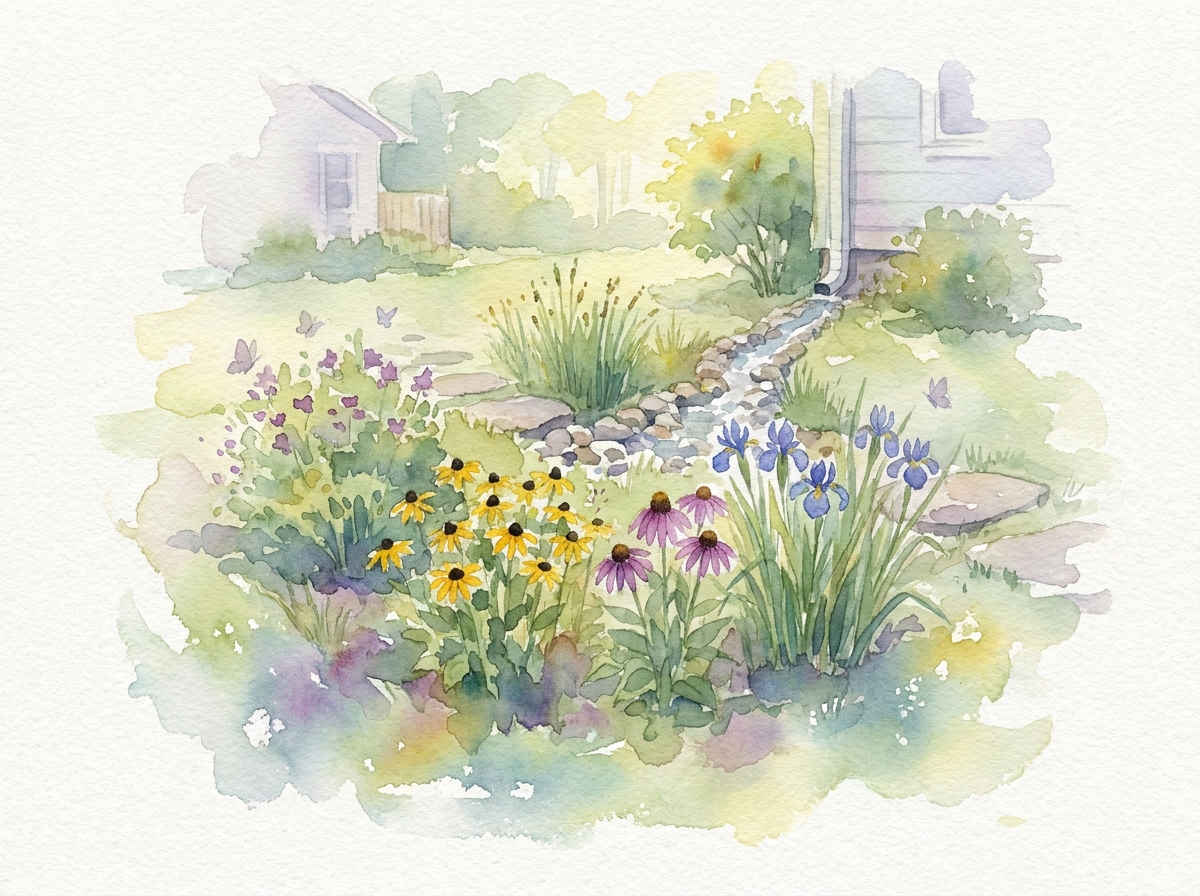 Water features
Rain garden design tool
A rain garden is a shallow planted basin that catches the water pouring off your roof and driveway a…